February 20th, 2024
The Interwoven Paths of Environmental and Social Justice
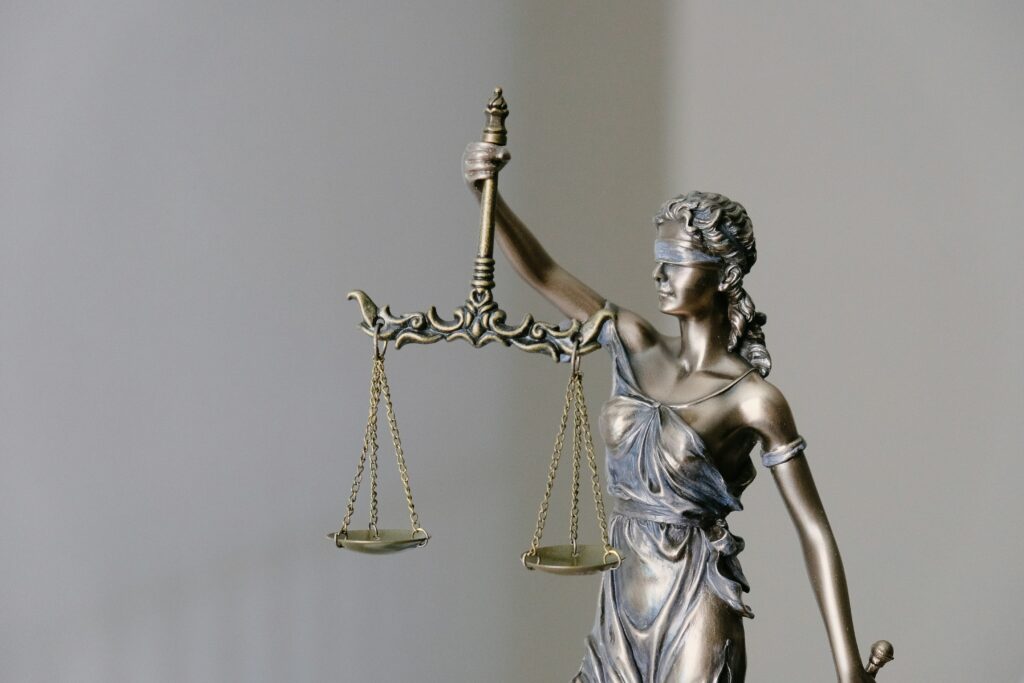
Photo by Tingey Injury Law Firm on Unsplash
Environmental justice and social justice are distinct yet intrinsically connected realms. They intersect when the brunt of environmental issues is borne disproportionately by marginalized and socially disadvantaged groups. At the core of the connection between environmental and social justice is the fact that the environment we live in greatly impacts our quality of life. Clean air, potable water, and access to green spaces, for example, are essential components of healthy living. Unfortunately, these resources are not distributed equally, and historically disenfranchised communities often live in areas where these essentials are scarce or under threat.
Case Studies in the UK
The UK offers clear instances of this intersectionality. For example, in the case of air pollution, a team of researchers from the University of York found that economically deprived areas, frequently home to ethnic minority communities, tend to bear the brunt of poor air quality.
The British Lung Foundation found that In London, deprived boroughs like Tower Hamlets and Newham “were up to twice as likely to die from lung diseases than those in richer areas such as Kensington and Chelsea, Westminster and Barnet.”
A tragic example is the story of Ella Kissi-Debrah, the nine-year-old Londoner whose fatal asthma attack was directly linked to illegal levels of air pollution. Ella’s mother has been campaigning for Ella’s Law – a bill that would make clean air a human right. Ella lived in Lewisham, where her family continues to live. According to data by ONS, Lewisham is the most deprived area in Southeast London. Ella’s case is a stark reminder that having clean air is a fundamental right, not a privilege.
The Environmental Law Foundation (ELF) has also handled cases that address the issue of air quality impacting communities. One such case is in Carlisle, where residents fought against an incinerator threat that would have compromised air quality and posed health risks to them. The project was eventually withdrawn by the company, a win for the residents who fought against the project.
“Resistance in Carlisle sparks the flame of nationwide environmental justice and democracy,” said Emma Montlake, co-Executive Director of ELF.
Flooding in the UK, exacerbated by climate change, is another illustration of the intersection between environmental and social injustices. The floods tend to disproportionately affect underprivileged neighbourhoods—where investment in infrastructure is meagre, and recovery support is scant. Low-income families are also less likely to have insurance or live in well-constructed homes resilient to extreme weather.
Air quality and flooding are only two examples of how minorities and poorer communities are disproportionately affected by environmental impacts and clearly interweaves the issues of social justice and environmental justice.
Towards an Equitable Horizon
The UK has a long road ahead to fully intertwine environmental justice with social justice. Disparities still exist, and as we transition towards a sustainable future, it is imperative that this future is just and equitable for all.
“Future strategies must integrate environmental concerns with social policies, ensuring that as we protect our planet, we uplift and support all of its inhabitants—regardless of socioeconomic status, race, or geography. Our collective journey towards environmental sustainability will be judged by our ability to deliver justice for all, providing a beacon of hope for an equitable and inclusive future,” Emma concludes.