September 24th, 2025
Loch Lomond at risk: Why we’re supporting communities against Flamingo Land’s resort plans
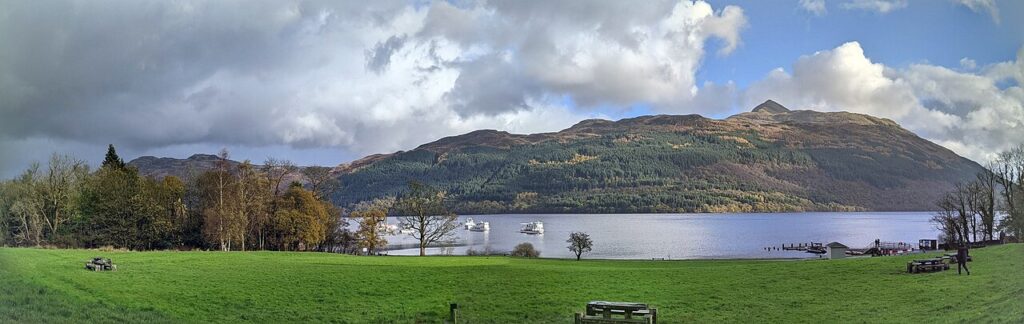
Photo from Wikimedia
ELF received an enquiry this year from a local community group Balloch and Haldane Community Council (BHCC) who were looking for assistance in objecting to plans submitted by theme park operator Flamingo Land to build a water park and resort on the shores of Loch Lomond, one of Scotland’s most iconic landmarks. The proposal has many elements including hotels, a monorail, a water park, and restaurants. This proposal has loomed over the local community for almost 10 years in various iterations and is now set to be decided by the Scottish Ministers.
This application has been highly controversial, being noted as one of the most unpopular planning applications in Scottish history. This is for good reason; the freshwater loch not only has significant cultural value but is an astounding natural site. It hosts a large variety of habitats like wetlands, glens, woodlands, mountains and Scotland’s largest freshwater loch, which supports wildlife of all kinds. It is a haven for reptiles, mammals, birds and insects.
There have been over 150,000 public objections from local community members and experts, including the Scottish Environment Protection Agency, local politicians, the Woodland Trust and The National Trust. BHCC have noted concerns about how the development would dominate the local area due to its large scale making life a ‘living hell’, with little benefit for the local community.
The current application was originally rejected in September 2024 by the National Park Authority due to flood risk, impact on biodiversity and nature restoration, removal of woodland including ancient woodland, lack of consideration of climate change and sustainability concerns. However in May, following an appeal to the Scottish government, reporter Mr David Buylla gave notice of his intention to allow the appeal, overturning the National Park board’s unanimous rejection. Following this, 50,000 people wrote to the Planning Minister forcing him to recall the decision. The final decision is now due to be made by Ministers themselves, and a final decision is expected imminently.
The way this application has been dealt with by the Scottish Government has been heavily criticised, particularly due to Mr Buylla being appointed to act as examiner to the appeal, meaning he has produced a report and recommendation that has been submitted to Ministers. There is no indication this report, which is given substantial weight in decision making, will be different to his initial decision, which has raised concerns about bias.
ELF is extremely concerned about the prospect that an application that has been widely denounced by major environmental organisations and such a large number of community members could be approved. We have referred this case to Environmental Rights Centre Scotland who will be carefully scrutinising any decision made for legal errors. We hope the Ministers make the right decision for nature and the local community.