December 15th, 2023
Crisis in the Estuaries: Uncovering the Environmental Neglect in Welsh Waters
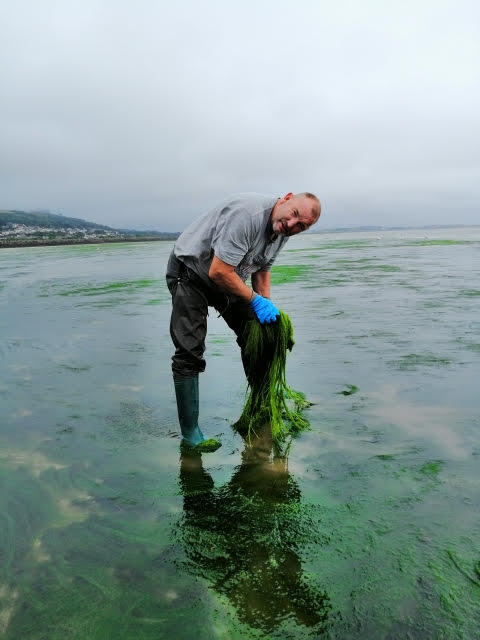
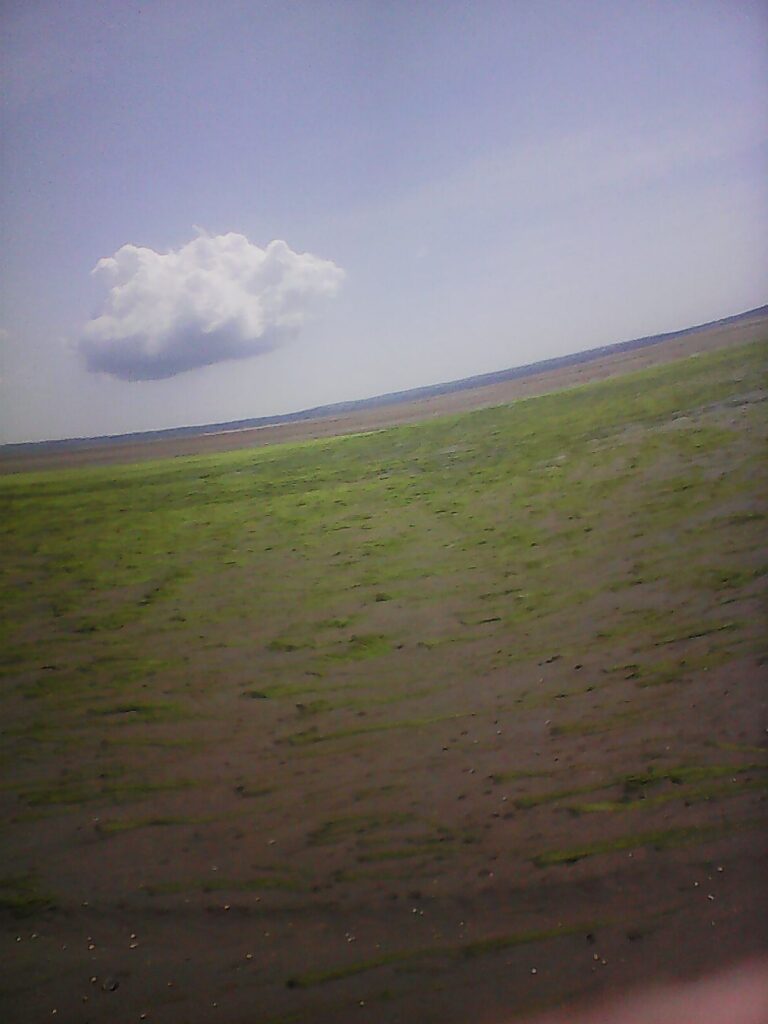
Image: Robert Griffiths pictured with weeds growing over the main cockle beds. They stretch out for 2 miles and are a mile wide and kill all things underneath them. These are caused by sewage being deposited in these areas creating an imbalance in the nutrient levels.
Article By Tanvi Sengupta, ELF Paralegal
The Growing Concern Over Environmental Negligence
At ELF we come across hundreds of enquiries from across the country involving shocking violations of nature and communities. One recent matter we have been working on has involved the negligence of regional governments in Wales to a staggering degree, resulting in the widespread mortality of cockle due to unlawful sewage releases. Our enquirers stated they have struggled to get any media attention on this issue, with news outlets ignoring their story. Slowly the extent of this problem nationally is coming to light with recent reports of Welsh Water admitting to having illegally spilt untreated sewage at dozens of treatment plants for years, as well as the recent Fish Legal victory in the High Court against their defective river improvement plans around sewage overflow. However, there is still a long way to go. ELF is hoping to not only help with the legal case below but also to bring warranted attention to this significant failure of the system.
A Legal Battle for Environmental Justice
This Autumn, William Thomas, a former councillor, and cockle gatherer got in touch with us asking whether we can assist on a legal case on illegal sewage releases by Welsh Water and, in particular, the impact this has had on the local cockle beds. He and his fellow cockle gatherer Robert Griffiths have spent countless hours monitoring this situation, gathering data and campaigning for this issue for over 20 years and put together a damning case on the impact the sewage is having on the local habitat. Sewage pollution has been well-documented to have a devastating effect on waterways. It causes excess nutrients to enter these environments and disrupt the coastal ecosystems, causing harmful algal blooms which result in the mass deaths of local aquatic species. It also causes any remaining species to be contaminated by E coli which, again, is well documented to have an extremely detrimental effect on human health.
Evidence of Neglect and Environmental Damage
William and Robert have been monitoring numerous Welsh Water sites and have recorded innumerable breaches. They have been concerned with the area of the Loughor estuary, where there has been a huge depletion in cockle beds due to sewage spills. The statistics for this area are, in many ways, ‘res ipsa loquitar’ though even they do not tell a full picture as not all the spills over the years have been reported. The data for the area of Pembrey to the Loughor estuary showed there have historically been 52,571 hours of spillage into this estuary. That is a total of 6 years’ worth of unlawful spillage. In 2018 Welsh Water admitted to discharging up to 6.5 million metric tons of sewage over the past 15 years alone. This spillage has resulted in the loss of millions of tons of shellfish and an uncalculated loss to the economy of the area. These are numbers and losses that are perhaps impossible to comprehend.
One particular incident occurred in 2005 where, after the fracturing of a main sewer line, there was a mass extinction of all the cockle along the Loughor Estuary. It Is believed 10,000 million cockles died in under 2 weeks, resulting in a £5-10 million loss to the local economy. These sewage spills have been a matter of slow, brutal violence against not just cockles but the natural water bodies of Wales. Countless other species have been affected by these spills, with some species having completely disappeared from the area.
Persistent Advocacy from William and Robert
William and Robert have been advocating for this cause tirelessly for 20 years. They have presented this issue to Welsh Water, their local Council, Welsh Assembly Petitions, Natural Resources Wales, the Environment Minister, OFWAT, the WIEPA and the Welsh Climate Change Committee. They have also been to Court twice on this issue, winning the case they brought to the European Court of Justice who confirmed there has been a breach of the Urban Wastewater Directive. They have had countless correspondences trying to get these organisations to do something whether that be enforce permits, provide more data, investigate the issue, or comply with the ruling of the Court. However, despite all their action, unbelievably nothing has changed. Neither Welsh Water nor the NRW have rectified the breaching action in question.
The Challenge of Environmental Regulation in Post-Brexit Wales
A common theme with the enquiries that come to ELF is unlawful activity going unsanctioned due to the lack of enforcement. The problem is not the governing laws but the enforcement of them. This has been worsened by the environmental regulation gap left after Brexit in Wales. The Interim Environmental Protection Assessor for Wales is not an effective means of holding organisations to account, as their focus is on the functioning of environmental law, rather than breaches of it. They can make recommendations but do not have the powers to investigate and hold either the NRW or Welsh Water to account. ELF is working with barrister Alex Shattock from Landmark Chambers to move this case forward and act against the NRW for their failures to enforce their permits and will be starting proceedings in the New Year.
Consider donating to help us continue fighting for environmental rights.
The work that we do is powered by people like you. If you’d like to support us, as we help grassroots organisations fight for environmental justice, you can do so by donating here.