May 18th, 2026
Community Victory: Quarry Application Withdrawn After Nine-Year Battle
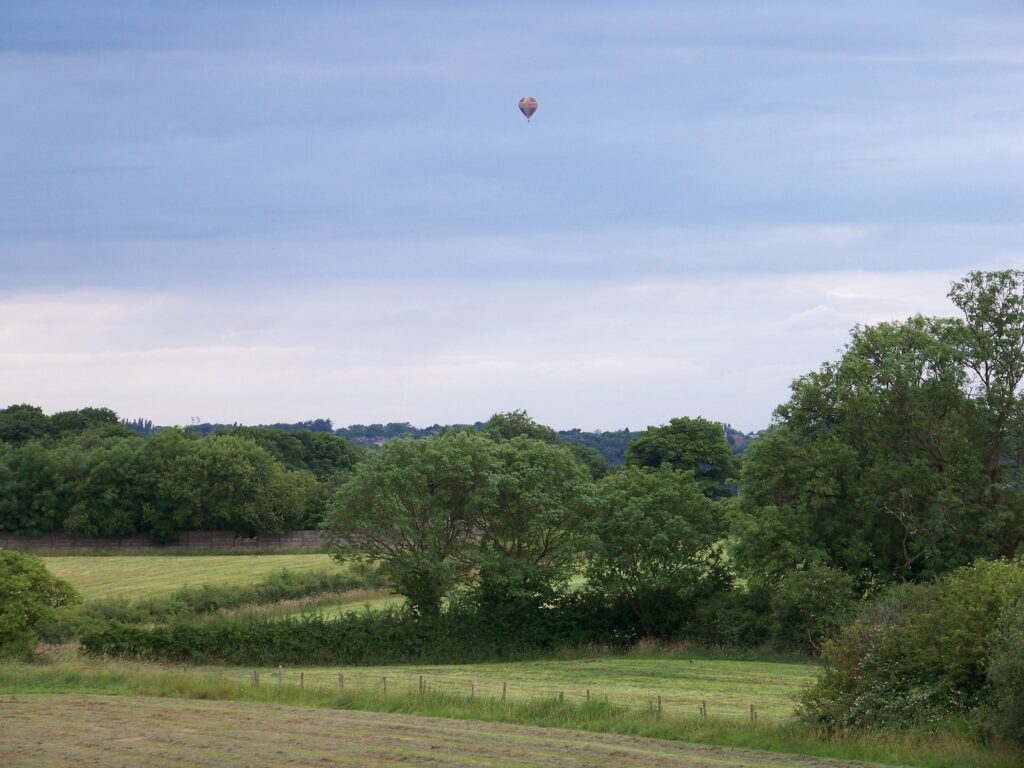
Samlesbury Countryside, James T M Towill
The local community in Samlesbury, Lancashire, can finally breathe a sigh of relief. After a protracted nine-year battle against a proposed sand and gravel quarry at Lower Hall Farm, the application has been officially withdrawn. This victory follows legal pressure from ELF, guided by Rebecca Sage of Landmark Chambers, highlighting the Council’s duty to adhere to environmental regulations.
The controversy began in 2017 with a proposal for the phased extraction of 3 million tonnes of sand and gravel over a 25-year period. The site, located in the heart of Samlesbury, comprised vital grassland, ancient woodlands, and hedgerows. Local residents, supported by the Environment Agency, Natural England, and the Woodland Trust, raised grave concerns about the development’s impact on biodiversity, given the site’s close proximity to the River Ribble—home to protected European Otters—and the Red Scar and Tun Brook SSSI.
Although the proposal had been in the works since 2017, the process was plagued by delays, in part due to serious environmental information omissions in the application (which was made in 2021). Under the EIA Regulations 2017, the Council requested further environmental information (a “Regulation 25” request) in May 2021. For over three years, the applicant provided information in a “drip-feed” fashion. By 2024, much of the underpinning data—including ecological surveys—was between 7 and 11 years old. Despite these glaring omissions, the application remained under consideration This was despite advice from the Council’s own Senior Ecologist suggesting that the application lacked sufficient information to be determined and that it should be withdrawn or rejected.
ELF intervened with a formal letter in March 2025 to Lancashire County Council, outlining some of the key legal issues, where we concluded that the Council could not lawfully grant permission. This was due to the need for additional environmental information which had not been provided, the information that was provided now being severely outdated and the “drip-feeding” of information throughout the process prevented the public from participating in a meaningful consultation, a breach of established EIA legal principles. ELF’s letter presented the Council with two choices: require the applicant to submit an entirely new, up-to-date Environmental Statement or require the applicant to withdraw the application.
Following this legal pressure the applicant withdrew the application in May 2026. This case serves as a powerful reminder that local communities do not have to accept indefinite delays and that environmental regulations exist to ensure that development never comes at the cost of outdated or incomplete science.