March 15th, 2024
International Women’s Month feature: Flora Curtis and Emma Montlake
As we celebrate women’s month, we feature some of ELF’s powerful women who have been working to protect the environment. This week, we are featuring Flora Curtis and Emma Montlake.
Flora Curtis
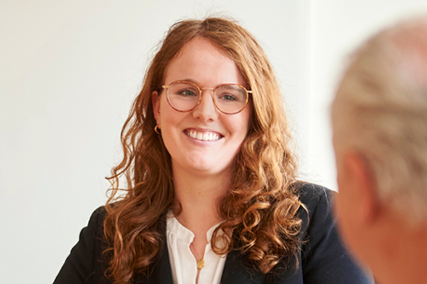
Flora is ranked as one of the top planning barristers under the age of 35. She acts for a wide range of clients including NGOs, central and local government, developers and landowners, and local residents.
Q: Can you share a defining moment in your career within environmental law or environmental justice that has empowered you as a woman in this field?
For me, I wouldn’t say there has been a single defining moment, but rather a series of small moments that have helped to empower me as a woman working in the planning and environment sphere. As a barrister working in this field, it is not unusual to go into a court or an inquiry only to realise that you are the only woman in the room. The most inspiring moments have therefore been seeing other women excel in those male-dominated spaces. It is empowering to know that there are women who have trodden the path to a successful career at the bar before me, and it reminds me of the responsibility I have to help build up women joining the profession after me.
I have also found it empowering being one of the committee members of an organisation – Legal Voices for the Future – that was founded by women, and continues to be led by women, who are all passionate about the ways in which young lawyers can drive change within our profession in the face of existential environmental challenges. I am constantly impressed with the enthusiasm and drive that my fellow committee members bring to that mission.
Q: How do you perceive the intersectionality of gender and environmental issues in your work? Are there unique challenges or opportunities that you believe women bring to the field?
There are many ways in which gender intersects with environmental issues in the type of work that I do, and in environmental law more generally. One notable example is in the climate sphere. Climate change disproportionately affects women, along with many other marginalised groups. It has therefore been unsurprising to see women at the forefront of many climate movements, including strategic litigation. Last year, for example, the KlimaSeniorinnen appeared before the European Court of Human Rights to argue that Swiss climate policies violated older women’s right to life and health due to the disproportionate impact that heatwaves would have on that group of women.
Q: In your opinion, what role can women play in promoting sustainability and environmental awareness on a national scale?
As noted above, certain types of environmental harm and degradation disproportionately affect women. In those circumstances women have a key role to play in ensuring that the impacts of environmental degradation on women are recognised and addressed by courts and policymakers. More broadly, the challenges posed to humanity by the climate and biodiversity crises are monumental in scale – women have as important a role to play in responding to those challenges as any other group.
Q: As a woman in environmental law, have you encountered obstacles or biases in your career, and how have you overcome them?
There have certainly been obstacles for me in my career to date. At the bar, the figures have repeatedly shown that women continue to earn much less than male barristers over the course of their careers. My professional experience to date has certainly been coloured by my sex – I have had, for example, witnesses and opponents seeking to undermine me on the basis of my age and gender. It is necessary to be resilient in the face of such challenges so that they do not interfere with the quality of your work.
Q: In celebration of International Women’s Day, what advice would you give to young women aspiring to pursue a career in environmental law or environmental justice?
The biggest piece of advice I would give is not to let imposter syndrome stop you from pursuing the career that you want. The worst thing you can do is to convince yourself that you are not good enough, and to self-select out of joining the profession. There is a place – and a need – in the legal profession for women of all backgrounds.
Emma Montlake
Emma Montlake is the joint Executive Director of the Environmental Law Foundation and Head of Casework. Emma is a solicitor; passionate about nature and wildlife.
Q: Can you share a defining moment in your career within environmental law or environmental justice that has empowered you as a woman in this field?
There have been many moments, but one or two come to mind. One was last year, being part of a speaking panel for the launch of the ELF/ FOE/RSPB Aarhus Convention – Pillars of Justice II Report and just noting to myself quietly that it was the first time I had been on an all women panel and what a surfeit of fantastic women there were around me. Dr Jane Holder of UCL, Carol Day of RSPB and Leigh Day and Katie de Kauwe of FOE – I was proud to be amongst them and felt proud of their individual achievements as pioneers in their field.
Q: How do you perceive the intersectionality of gender and environmental issues in your work? Are there unique challenges or opportunities that you believe women bring to the field?
I am will aware as a woman of the gender inequalities that are entrenched across societies, nationally and internationally. I experience it in subtle ways, though these days far less so in the environmental law sector. In the bad old days when I was a commercial property lawyer I worked for a firm and I remember becoming aware that a younger male colleague, doing the same work, was being paid substantially more than me. It was around this time that I went to work for ELF. I hope this wouldn’t happen now so obviously and shamelessly. Such entrenched inequalities do not serve women well. This is a challenge.
Women being front and central to environmental decision making is essential for better decisions. Women not being included in decision making, makes for poorer decisions. I remember hearing about an instance in Fiji, a village relocated due to sea level rises. They didn’t consult the women of the village and whilst houses were rebuilt, they did so without including kitchens; that was for the second phase. As perverse as that sounds, if women had been included, rather than a few men making the decisions, that situation would not have arisen.I might also consider that during covid, if women had been included in the small cabal of men at No 10, we might not have had quite such a disastrous covid experience and schools might have opened before the pubs!
There are enormous opportunities to improve decision making by bringing women to the table, and indeed other ethnic groups into environmental decision making. There is nothing like the lived experience.
At ELF we see many women leading campaigns against environmental harm, Dido Berkley, interviewed for this series, stalwart protector of the River Thames (for decades), Pat Strack, who has been leading local opposition to the loss to the local community of the wonderful Woodcock Hill (for decades), Susan Sullivan of the Friends of Betteshanger County Park, leading the local response to the two terrible proposals for a surf lagoon and a 200 bed hotel that will see the destruction of turtle dove habitat and the second largest lizard orchid colony in England, Lesley Davies the CEO at the Herts Wildlife Trust leading the response on the disastrous nature Broadwater Lake (SSSI) proposals for a water sports centre. All these women and so many more are leading the charge for environmental protection in their communities. Both as leaders of NGOs and as community organisations.
Q: In your opinion, what role can women play in promoting sustainability and environmental awareness on a national scale?
First, it is already well recognised that women will be harder hit by climate change, exacerbating already entrenched gender inequalities.
Women have a massive role to play, first in the education of what a sustainable life looks like and teaching environmental awareness; both as mothers and teachers. Noting that it is predominantly women who take the lead caring role in society and a major role as teachers. ELF was recently invited to put together a video introducing environmental law to teachers and students of the Baccalaureate across the world, as environmental law will be taught for the first time this year. Brilliant! This was conceived of by two women who have also written the syllabus.
In the field of environmental law itself, there are some amazing women working in this field. Some of the leading practitioners of environmental law that ELF works with are women, and all inspiring, such Monica Feria-Tinta, Carol Day, Susan Willman and Lisa Foster. And some of the leading environmental law academics are women, such as Dr Jane Holder and Dr Jo Smallwood. For my part and where I sit, I see women at the forefront of national environmental and climate justice work.
I would of course have to mention the rights of nature movement. Whether there is an intrinsic response to care for nature, I certainly observe that women are playing a leading role in this movement and particularly in the UK.
Q: As a woman in environmental law, have you encountered obstacles or biases in your career, and how have you overcome them?
As mentioned previously, I haven’t experienced the same biases in the field of environmental law as was my experience of other fields of the law. This may be because there are more women working in this field and so ergo, there are less gender based biases.
Q: In celebration of International Women’s Day, what advice would you give to young women aspiring to pursue a career in environmental law or environmental justice?
Work hard, if protecting the environment is your passion, pursue it with vigour and don’t be put off. The natural world needs you!