April 9th, 2026
Community Spotlight: Sussex Wildlife Trust
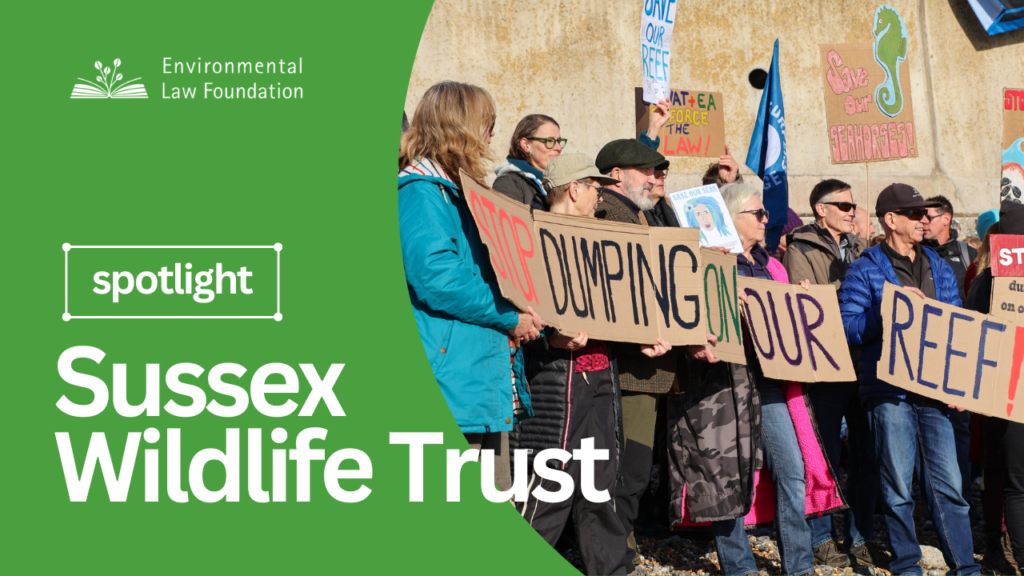
Sussex Wildlife Trust (SWT) approached the Environmental Law Foundation (ELF) over serious concerns about a licence allowing dredged material from Brighton Marina to be dumped at the Beachy Head West Marine Conservation Zone —an area recognised for its ecological importance. Although dredging had taken place there for decades, the site was designated in 2013 as aMarine Conservation Zone and also falls within a Site of Special Scientific Interest, home to vulnerable habitats and species such as native oysters and short-snouted seahorses.
Despite strong objections from SWT and other marine conservation groups, the licence—permitting up to 100,000 tonnes of sediment to be dumped annually—was approved in 2025. With support from ELF, SWT has since taken legal action, arguing that the decision failed to properly account for the site’s protected status and ecological value, raising broader questions about how effectively the UK’s marine protections are being upheld.
We interviewed Sarah Ward on how we worked with them to help their case.
Can you tell us a bit about yourself and your community (and the place you’re working to protect)?
I work as the Marine Conservation Officer at Sussex Wildlife Trust; we work to protect nature across Sussex, on land and out to sea. We advocate for protected areas across the counties – and for those areas to have meaningful, enforceable management measures to improve the ecosystem it strives to protect.
What environmental issue were you facing, and how was it affecting people locally?
A local Marine Conservation Zone, Beachy Head West, has been impacted since designation by the disposal of dredged material from Brighton Marina. We believe this practice is fundamentally incompatible with the fragile ecosystems that the area should be protecting and reviving – the sediment does not disperse well and causes sedimentation, whereby the sediment smothers the habitat and the marine life that lives there.
What steps did you take before getting in touch with ELF?
We have been involved in formal consultations around the Marine Licence for this activity as well as publicity to put pressure on the decision-makers not to renew the existing licence. When the licence was ultimately granted for a further 10 years, we decided to look at legal action.
What kind of support did ELF provide, and what difference did it make for you or your group?
ELF provided invaluable legal advice and explained the process which gave us the confidence to proceed with legal action. This was a huge decision with financial and reputational risk associated with it; being able to talk things through allowed us to make an informed decision. ELF also linked us up to the team at Leigh Day and our excellent Barrister at No5 Chambers.
What changes have you seen since then — even small wins or progress?
Ultimately the licence decision was quashed, which is a brilliant outcome. There is continuous work to be done here to ensure the right decision are made in the longer term – we hope not to need to take further legal action but we know ELF are here to help if we need to.