
Creating a Sustainable Future for Rivers and Humans Alike
Protecting the Rights of Rivers
Lewes District Council recently passed a Rights of Rivers Motion to protect the River Ouse in East Sussex. This is a groundbreaking move as there are only a few rivers in the UK that are currently protected by law. We believe that this motion is the first of its kind in England. Co-authored by ELF’s own Emma Montlake, Tom Brenan, and Cllr Matthew Bird, the motion seeks to safeguard the river from pollution, climate change, and land use changes while upholding environmental flows, natural river processes, and local communities’ rights.
An innovative Charter will be developed to redefine human-river interaction, giving rivers a voice and promoting sustainable river systems. This Charter will have a huge impact on the River Ouse and the biodiversity within it, as well as the upstream and downstream communities that are affected by the river. It will ensure environmental flows, natural river processes, and local communities’ rights are respected and protected.
Ensuring Sustainable River Systems
The Charter will be designed to revolutionise the way humanity interacts with the River Ouse, returning it to the way it has been used for thousands of years by all creatures that inhabit the river. It will provide a safety net for the river, protecting it from pollution, climate change, and land use changes, so that future generations can reap the benefits and use it wisely.
Giving a Voice to Stakeholders
The Rights of Rivers Charter will mark a reform in the way humans interact with nature. It encourages understanding and respect towards nature and the rivers and is a necessary step to ensure the protection of these incredible resources. ELF is proud to have initiated this movement in Lewes District, along with Green Party Councillor Matthew Bird, and the LDC, and the community is excited for the positive changes it will bring.
Reflection and Responsibility
The Charter is an essential document for establishing sustainable river systems. It will outline expectations for those involved in the management and use of the river and grant a voice to all stakeholders in terms of decision-making. A collaborative environment will be created for all stakeholders in order to ensure rivers are protected in the long-term. Moreover, it will serve as a reminder for people to reflect on their relationship to nature and to protect these invaluable resources for future generations. The Rights of Rivers Charter is an opportunity for a better future – one where our rivers can thrive, and humans take responsibility for their interaction with nature.
Consider donating to help us continue fighting for nature’s rights.
The work that we do is powered by people like you. If you’d like to support us, as we help grassroots organisations fight for environemental justice, you can do so by donating here.
Over twenty years ago there was a new ‘Storm Water Pumping System’ built to protect our beaches and coastal waters at Whitburn and Seaburn near Sunderland. There was immediate evidence that sewage was being discharged to sea contaminating the fishing and polluting the beach, and this has continued to this day despite constant protests, a Public Inquiry and a EUCJ case found against the UK.

Recently, just like other parts of the country, there have been a number of planning applications for many new houses and so local people have queried how there can be capacity in the sewage system, when there is constant spilling already. The local Council decided that Councillors could not question the Water Company’s assurance that there was capacity; that this was not within the LPA’s remit.
Luckily we contacted ELF’s Emma Montlake who obtained a legal opinion from Alex Shattock which highlights that the LPA has a legal duty to ensure capacity in the sewage system exists for new building. This has been forwarded to our two local Councils and we await confirmation that they will change their views! It is also vital that there is independent scrutiny of local infrastructure so that our coastal and river waters are protected from sewage discharges, and we are glad to have the support of local groups and ELF to try to make this happen locally, and nationally.

The Environment Agency appear helpless to carry out their regulatory duties in this case and are intending to just add additional illegally connected flows to the Permit without public advertising or input and so there is a local Petition (http://bit.ly/30vyD6A) to try to ensure public knowledge of, and participation in, this process.
Our grateful thanks to ELF’s Emma and Alex Shattock for their help. Bob Latimer and Steve Lavelle.
ELF has received three more new enquiries in the last month regarding farming intensification impacts. Concerns about the impacts of industrial farming appear to be growing.
As we reported previously, ELF has been assisting a community in Devon afflicted by an industrial sized dairy unit, with a herd of 1,000 cows, unregulated development predominating. There are many environmental impacts associated with these matters that have not been dealt with, the local authority seemingly powerless to grapple with the problem. With numerous retrospective applications, prosecutions by the Environment Agency, repeated failures to comply with planning conditions, the final straw came in January 2012 (over the Christmas break) when the owner built an earth banked 7 million gallon capacity slurry lagoon without planning permission. This remains an outstanding issue, not yet decided by the local authority despite years of activity by local residents to stir them to action.
The community has set up a campaign Too Much Slurry in the hope that other communities similarly and increasingly affected, can have a central hub of information and access to assistance. Too often separate communities fight these matters alone, without knowing of those who have already fought these battles with experience of what works and what doesn’t. ELF is pleased to be working with these communities and we are developing plans to do more.
ELF is also organising a farming conference to take place in Exeter in 2018, more details available soon. With partners from Larcomes, an ELF member firm, and Exeter University, we plan to draw on the experience of communities, regulators and farmers to identify steps to address the damaging impacts from industrial farming methods.
Photo: toomuchslurry
An important new case has clarified the law on consultation where changes have been made to an original planning application, thanks to ELF support.
Last year ELF was approached by Del Brenner (DB), secretary of the Regent Network (RN), over the redevelopment of Eagle Wharf on the Regents Canal. A timeless canal side area, where old industrial buildings, locally listed including an artists photographic studio had existed since the 1960s providing low rent space for the creative industries.
RN campaigns for London’s waterways, to bring them back to life, with a focus on the protection of London’s canals and inland waterways. RN, over many years has received substantial support from ELF with various matters concerning development impacts on the Regents Canal and other inland waterways. A planning application was made in July 2015 for the redevelopment of Eagle Wharf, demolition of much of the site and a 50-unit development. DB objected. However, 10 months later following substantial changes to the application, the council approved the application without further public consultation.
Instructing Hannah Noyce, then at 1COR, ELF sent a pre-action protocol letter in December 2016 regarding this failure to re-consult, amongst other matters. A decision was quickly made to judicially review the council. We were also aware that Holborn Studios Ltd, were also challenging the decision. Permission was granted and as we moved towards a hearing date in October 2017, ELF instructed Ian Graves at Shakespeare Martineau, a new and most welcome ELF member, to handle the case alongside a newly appointed barrister, Jessica Elliott of 1 COR.
The court held that the failure to re-consult the public had been unfair and the planning permission was quashed. ELF is delighted with the success of the challenge. This is a good decision and clarifies the law on when re-consultation should take place. ELF would like to say a very big thanks to our ELF members, all of whom acted pro-bono. R (on the application of Holborn Studios Ltd) v Hackney LBC; .R (on the application of Del Brenner) v Hackney LBC [2017] EWHC 2823 (Admin), John Howell QC sitting as a High Court Judge
You can read more analysis here on the 1COR Human Rights Blog.
ELF was contacted in May 2017 by Cranleigh Civic Society (CCS) about ongoing pollution from a sewage works into Cranleigh Waters, in Surrey. CCS is concerned that the situation will be made worse by planned housing developments and that the issue is not being properly addressed by the authorities in breach of Water Framework Directive requirements. CCS has been campaigning on this issue for more than three years with no legal guidance up to now.
Cranleigh Waters, a stream (classified as a “main river” by the Environment Agency as it is under its jurisdiction rather than that of the local authority) and an outflow from a sewage treatment facility operated by Thames Water, has a multitude of historic licence and permits for sewage effluent discharge to facilitate the dilution of effluent.
Over the last few years the stream has stopped flowing, particularly in the summer months, due to changes in rainfall patterns caused by climate change, low aquifers and increases in population. If the flow is too low the stream can’t dilute the sewage effluent sufficiently and Cranleigh Waters has now become eutrophic. This results in a water body rich in phosphates, nitrates, and organic nutrients and encourages the proliferation of plant life which kills fish and other animals by depriving them of oxygen.
In light of this, CCS has particular concerns over the amount of development proposed for their village and surrounding area. Waverly Borough Council (WBC) has granted planning permission for 1,320 homes and at least 5,000 new homes are proposed to discharge into Cranleigh Waters. This would represent an 86% increase in the discharge of effluent from current levels. The local angling society already has evidence of significantly dwindling fish stocks downstream and CCS considers additional housing projects are likely to cause further impacts.
CCS believes that the baseline data in the June 2017 version of an Amec Foster Wheeler report on Cranleigh Waters carried out on behalf of WBC, is based on a mean value for the period 2010 – 2015. A water expert working with CCS considers that this cannot be described as ‘current’, yet is used as a basis for all modelled predictions. For example, it is indicated that fish are at good or high status whereas locally provided information from an authoritative source would indicate their virtual absence in 2016.
Two weeks ago ELF was urgently notified by CCS that they had been presented with an opportunity to present oral representations at WBC’s local plan examination. Part of those submissions was to be mitigation measures that CCS proposed for Cranleigh Waters in the context of the local plan. ELF sought urgent assistance from our pro-bono professional membership network and John Bates, barrister at Old Square Chambers, long time ELF member and water law specialist, kindly agreed to assist.
Amongst many lines of discussion with John, of particular interest was the finding of the EU court in the Bund für Umwelt case. This found that there was an “obligation of the Member States not to authorise a project that may cause a deterioration of the status of a body of surface water”.
However, having gone to considerable effort, it was with great disappointment that 12 hours before CCS were due to present their submissions, they were told the Inspector no longer wanted to hear from them. This was extremely disappointing. CCS hope that the Inspector will consider their written representations although feedback from one attendee indicated that the environment was not on the table for discussion.
Adrian Clarke of Cranleigh Civic Society and a Fellow of the Chartered Institute of Building who has worked on several large housing and commercial projects, said:
“We are not against new building; we accept the need for new housing particularly in South East England. Our issue is that we think that local authorities should make sure that they sort out the infrastructure before approving new housing estates. In many cases, they are simply not doing that.”
Despite this latest setback, CCS’s campaign continues. The local MP Anne Milton has arranged a meeting with CCS, the Environment Agency, Thames Water and WBC on 24th July 2017 to discuss the problems at Cranleigh Waters.
ELF sees so many synergies with communities that we are working to support and we will continue working with CCS and others who campaign on issues of water quality. More generally of course this case highlights the pressures on the natural environment caused by a rapid increase in house building and the need for regulatory authorities to properly consider their statutory environmental duties in addressing them.
ELF has been assisting a community in Bideford, Devon where a large industrial dairy farm of 1,000 cows, all held in holding bays with no outside access, has over the last few years been established in close proximity to a Special Area of Conservation (SAC) and Site of Special Scientific Interest (SSSI) without all the necessary permissions being obtained.
Local residents have been concerned for many years about the negative environmental and health impacts on the local area of such a large intensive farming operation.
Following numerous pollution events being linked to the farm in question, in 2011 the Environment Agency (EA) investigated another pollution incident which resulted in a prosecution – see here
Whilst investigating, the EA also discovered that there was insufficient slurry storage capacity at the farm. Using their Silage, Slurry and Agricultural Fuel Oil (SSAFO) powers, the EA advised the farmer to increase the storage capacity, which was duly done. A one hectare slurry lagoon was constructed; however planning permission was not sought or obtained.
The local authority having resisted increasing pressure from local people, after nearly four years of unregulated development, last year, decided to invite a retrospective planning application and issued an enforcement notice against the unregulated development of the lagoon.
The farm itself is in the North Devon Area of Outstanding Natural Beauty, and the lagoon lies approximately 235 metres at its nearest point from the Tintagel Marsland Clovelly Coast SAC and Marsland to Clovelly Coast SSSI.
Of particularly biological interest, the SAC is noted for its lichens: “The Atlantic oak woods in North Devon are nationally significant for their lichen interest. Bryophytes and lichens are among the UK’s most important contribution to international and especially European biodiversity”.
The siting of the farm and lagoon so near to these sites, bearing in mind that the farm produces vast amounts of waste, has been found to have potentially damaging effects on the nature sites, not least from the ammonia produced.
Natural England (NE) required a Habitats Regulations Assessment (HRA) which concluded that significant effects could not be ruled out from the waste holding lagoon and therefore permission should be refused. NE has also objected to the retrospective application in untypically strong terms. However, despite the unregulated nature of the development, and assessed damaging effects we are told that the local planning authority (LPA) is minded to approve the retrospective application.
A matter that has recently transpired is that the HRA was not carried out by an ecologist because the LPA no longer has one. A robust response from the applicant has forced the LPA to agree to undertake a new HRA, employing an external ecologist. This is deeply disappointing for the community and undermines the position of the LPA. The loss of expertise at a local authority level is troubling at a time when unrelenting pressures upon our countryside and wildlife are growing.
ELF has been working with the community and ELF chambers member, Stephanie Hall of FTB to unravel the legal challenges of a highly complex planning situation in an attempt to provide the local community with the best chance of opposing the retrospective application.
It soon became clear that through the incremental unregulated evolution of the intensive farming operation and the lack of action taken by the LPA, that this was a far more complex situation than at first appeared. We are continuing to work with Stephanie to assist the community.
ELF was approached last year by Ian Smith, vice chair of the Spurn Bird Observatory very concerned about Yorkshire Wildlife Trust’s application to build a visitor centre at Spurn, a spit of undeveloped Heritage Coast on the Humber Estuary. The centre would be a ‘temporary’ two-storey structure with a 76 space car park.
Spurn, a stretch of wild coast that is a haven for migratory birds, in both autumn and spring, attracts many visitors and is popular with local people.
With the usual raft of international and national nature designations, local planning rules also apply to protect it from development that is classed as permanent.
Refused last year over flooding and landscape concerns, an amended application was granted planning permission on 30th January 2017. The applications have attracted much local ire and the applicant seemingly unmoved by the strength of local opposition, pressed ahead with its plans.
In this instance both Natural England and the RSPB have been working with the applicant to approve the plans. However, there are other local organisations, especially within the bird watching community who are not convinced that the shadow Habitats Regulation Assessment produced by the applicant which concludes that there will be no significant environmental effects, is correct.
Having undertaken their own investigations they conclude that the building and car park, sited within the Spurn Heritage Coast, will not be without its impacts.
ELF has sought advice from Andrew Parkinson at Landmark Chambers on the merits of a challenge to the decision. We are particularly interested in whether it was appropriate to consider the building a ‘temporary’ structure.
Signposted to ELF under the new collaboration with Cardiff Law School (in coordination with the Welsh Wildlife Trust, Woodland Trust and FOE Wales), this enquiry concerns pro-bono support with the public inquiry, into the proposed M4 relief road in Newport. The inquiry was due to start November 2016 but has been postponed until March 2017.
The proposed road would cut through 8 km of the Gwent Levels, including four SSSIs, destroying one of the largest surviving areas of ancient grazing marsh and drainage ditch systems in the UK (see http://www.wildlifetrusts.org/M4)
Climate change expert Professor Kevin Anderson has said that the scheme will create a damaging increase in carbon emissions. The inquiry will consider these proposals and less environmentally damaging alternatives.
A new piece of Welsh legislation, the “Well-Being of Future Generations (Wales) Act 2015” may be leverage against these proposals. There are seven pillars, the second of which states “A nation which maintains and enhances a biodiverse natural environment with healthy functioning ecosystems that support social, economic and ecological resilience and the capacity to adapt to change (for example climate change)”
ELF has gathered an amazing collection of barristers from amongst some of our member chambers, Garden Court, FTB and 1 Crown Office Row, so that each of the 12 expert witness have a pro-bono ELF barrister allocated. Witnesses include Sir John Lawton, author of the incredibly influential and recently updated State of Nature Report, and Professor Kevin Anderson, climate change expert.
ELF would like to express its real gratitude to those barristers who have agreed to participate in this matter.
Photo: rspb.org
Waterkeeper is a global movement to protect our waterways. ELF was contacted by the London Waterkeeper, concerned over the lack of action being taken by Tfl and the Environment Agency (EA) regarding diffuse pollution occurring in London’s waterways caused by the activities of Tfl. This case was sent to the ELF university network, University of Law, London and had a team of students working on this matter. A letter of advice was sent to various ELF network members including Sue Willman at Deighton Pierce Glynn who has agreed to act in a strategic advisory role going forward.
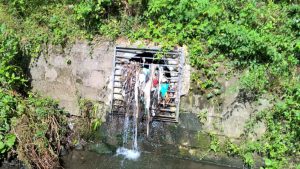
ELF will continue working with the London Waterkeeper and communities identified as suffering over issues concerning pollution in London.
Photos from London Waterkeeper.
Does Cornwall Council have the right to charge business for access to the sea?
ELF was approached by a local father who’s child attends a surfing school and who has lots of contacts in the surfing community. Cornwall’s decision to, in effect, charge for access to the sea, has widespread implications – especially for the many social enterprises, charities and one-person businesses which use the beach and sea.
This includes most surfing schools, some of which have been given planning permission for specific-purpose premises close to a beach. Is the beach public open space? Should the council be charging for using the beach to access the sea, or for using a beach? Should running clubs which use a park?
This issue is being pursued locally on behalf of the individual and by ELF Pro-Bono Law Clinic at Birmingham University Law School.