The Biodiversity Net Gain Policy and Its Challenges
In 2021, the Environment Act gave life to a significant policy that aimed to create a sustainable balance between urban development and nature conservation: Biodiversity Net Gain (BNG). BNG strives to ensure that post-development, the natural environment is in a better state than previously, measured through a system that sets a natural baseline and expects a 10% improvement from the development proposals. But the effectiveness of this policy is threatened by the potentially flawed assessment of baseline conditions. The Wenny Road Meadow controversy in Chatteris, Cambridgeshire, offers a vivid illustration of this conundrum.
Wenny Road Meadow: A Case of Mismatched Assessment
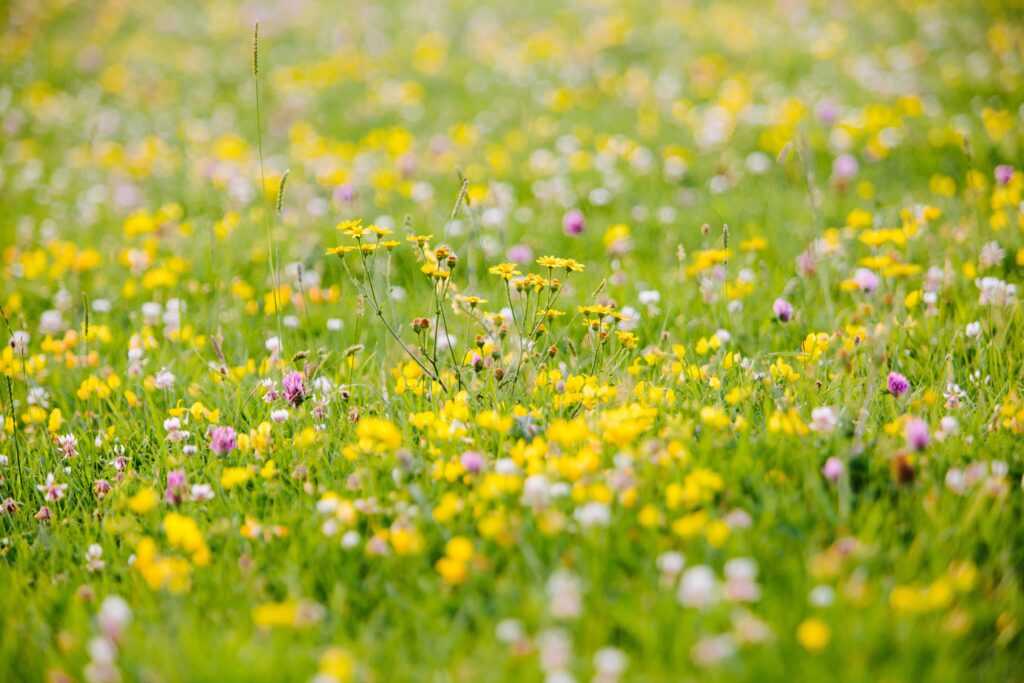
Wenny Road Meadow, the last remaining large green space in the land-locked rural town of Chatteris, has been under threat from a proposed housing development. Despite being home to a significant number of UK priority species and priority habitats, the most recent local plan, though somewhat out of date, includesthis area for development. The local community, understandably concerned about this loss of natural space and biodiversity, has been battling to protect it.
In 2021, an ecology report highlighted a potential biodiversity loss of between 25% and 36%, depending on the habitat classifications used. However, recent assessments failed to consider the significant invertebrate population on the site, which includes numerous scarce species. This omission has led to fears that the Net Biodiversity Assessment may either understate the environmental impact or be ignored by the council.
The Need for a Dispute Resolution Mechanism in BNG Assessment
In this case, a dispute has arisen between the Wildlife Trust’s assessment of the baseline habitat conditions and the developer’s ecologist’s assessment. When these assessments are inputted into the BNG metric, they generate starkly different outcomes: a neutral outcome or a massive biodiversity loss, according to the Wildlife Trust. This discrepancy underscores the need for a mechanism to resolve disagreements in assessments, a need that becomes even more pressing as a 10% Biodiversity Net Gain will soon become mandatory.
Council’s Role in BNG
The council’s Wildlife Officer, in an email exchange in December 2022, acknowledged this disagreement but refrained from passing judgement. He emphasised that the views of the Wildlife Trust should hold equal weight as his own but ultimately deferred to the Biodiversity Mitigation Hierarchy, which demands demonstration of minimum possible biodiversity loss.
However, despite this recommendation, the planning officer’s report did not give equal weight to the Wildlife Trust’s views, choosing instead to lean on the Wildlife Officer’s lack of objection. This reveals an alarming discrepancy in the interpretation of expert opinions and underscores the pressing need for a dispute resolution mechanism when interpreting the BNG.
Whitehawk Hill: Negligence in Nature Conservation
While the Wenny Road Meadow case shows the challenges of interpreting the Biodiversity Net Gain policy, another example from Brighton shines a light on how the planning system needs improvement to protect our valuable natural habitats effectively.
The Whitehawk Hill in Brighton, a designated Local Wildlife Site (LWS), has become a battleground between development interests and local conservationists. This case involves, the shocking mishandling of a large reptile population that was displaced due to a nearby development at a Site of Nature Conservation Importance (SNCI) in Portslade.
Consequences of Hasty Translocation: The Unfortunate Case of Displaced Reptiles
Thousands of reptiles were hastily translocated to Whitehawk Hill, a site already under threat of development, without any preparation or monitoring. The unfortunate reptiles were translocated in winter, which likely resulted in mass deaths due to cold conditions. What is even more alarming is that these reptiles were translocated to a site that itself is destined for development, a negligence that is hard to comprehend.
Protecting LWS: Efforts and Failures
This incident followed previous attempts by the Sussex Wildlife Trust (SWT) and the Environmental Law Foundation (ELF) to exclude Whitehawk Hill and other local wildlife sites from the Brighton Local Plan. Despite their best efforts, Brighton City Council allocated half of their LWS for development, threatening local wildlife. This series of events reflects a troubling trend of disregarding nature conservation in the planning system.
Dr. Allen Stewart, Professor of Ecology at Sussex University, states:
“This is an example of the worst practice, but I fear it’s all too frequent. In my experience, these ‘translocations’ are very rarely followed up with any monitoring to see if they have actually worked in terms of the animals surviving.”
BNG: Need for Checks, Balances, and Transparency
This story, along with Wenny Road Meadow, underlines the need for robust checks and balances in the planning system to uphold Biodiversity Net Gain policy. It’s vital that planning and development consider all factors impacting biodiversity, ensure transparency and public participation, and take to heart the objective of improving the state of the environment post-development. Our biodiversity, once lost, can never be regained. This fact should be at the forefront of any development planning discussion.
Conclusion: Safeguarding Natural Spaces
This situation at Wenny Road Meadow and Whitehawk aren’t isolated, and the current trend appears to see developers undermining the BNG by submitting inaccurate information. Without a robust system for assessing baseline conditions and resolving disputes, the government’s BNG policy may fail to protect the very natural habitats it is designed to enhance.
If we’re to safeguard our natural spaces and prioritise nature, it’s crucial to put mechanisms in place that uphold the true spirit of policies like BNG. Cases like Wenny Road Meadow underscore the urgency of doing so. We must ensure that these mechanisms consider all factors impacting biodiversity, allow for transparency and public participation, and ultimately strive for an environment in a better state post-development.
Consider donating to help us continue fighting for environmental rights.
The work that we do is powered by people like you. If you’d like to support us, as we help grassroots organisations fight for environmental justice, you can do so by donating here.

Creating a Sustainable Future for Rivers and Humans Alike
Protecting the Rights of Rivers
Lewes District Council recently passed a Rights of Rivers Motion to protect the River Ouse in East Sussex. This is a groundbreaking move as there are only a few rivers in the UK that are currently protected by law. We believe that this motion is the first of its kind in England. Co-authored by ELF’s own Emma Montlake, Tom Brenan, and Cllr Matthew Bird, the motion seeks to safeguard the river from pollution, climate change, and land use changes while upholding environmental flows, natural river processes, and local communities’ rights.
An innovative Charter will be developed to redefine human-river interaction, giving rivers a voice and promoting sustainable river systems. This Charter will have a huge impact on the River Ouse and the biodiversity within it, as well as the upstream and downstream communities that are affected by the river. It will ensure environmental flows, natural river processes, and local communities’ rights are respected and protected.
Ensuring Sustainable River Systems
The Charter will be designed to revolutionise the way humanity interacts with the River Ouse, returning it to the way it has been used for thousands of years by all creatures that inhabit the river. It will provide a safety net for the river, protecting it from pollution, climate change, and land use changes, so that future generations can reap the benefits and use it wisely.
Giving a Voice to Stakeholders
The Rights of Rivers Charter will mark a reform in the way humans interact with nature. It encourages understanding and respect towards nature and the rivers and is a necessary step to ensure the protection of these incredible resources. ELF is proud to have initiated this movement in Lewes District, along with Green Party Councillor Matthew Bird, and the LDC, and the community is excited for the positive changes it will bring.
Reflection and Responsibility
The Charter is an essential document for establishing sustainable river systems. It will outline expectations for those involved in the management and use of the river and grant a voice to all stakeholders in terms of decision-making. A collaborative environment will be created for all stakeholders in order to ensure rivers are protected in the long-term. Moreover, it will serve as a reminder for people to reflect on their relationship to nature and to protect these invaluable resources for future generations. The Rights of Rivers Charter is an opportunity for a better future – one where our rivers can thrive, and humans take responsibility for their interaction with nature.
Consider donating to help us continue fighting for nature’s rights.
The work that we do is powered by people like you. If you’d like to support us, as we help grassroots organisations fight for environemental justice, you can do so by donating here.

A Case Study of the Successful Campaign to Stop the Red Route and Shift Welsh Policy Towards More Environmentally Conscious Priorities
Introduction
The cancellation of the Red Route project in Flintshire, Wales has been welcomed by many and provides a strong example of the power of public pressure and community activism in protecting local environments. Through the mobilization of their members and supporters, North Wales Wildlife Trust (NWWT) and Stamp Out The Red Route were able to influence the Welsh Government’s decision-making to put the environment first. The success of their campaign also highlights the importance of resilience and perseverance in the face of seemingly insurmountable obstacles.
The Red Route Proposal
The proposed Red Route which aimed to alleviate congestion but would have caused severe damage to ancient Welsh woodlands, local farmlands, and native habitats. This damage would have been felt for decades to come, and the cost immeasurable. Despite this, alternative options such as the use of public transport, staggered start times for commuters, and building cycle lanes had not been explored.
Mobilization and Campaigning
NWWT and Stamp Out the Red Route rightly felt that these alternative options would cause far less damage to the environment and be easier to implement. The Red Route would have caused native species to lose access to their nesting grounds, and the introduction of traffic to a previously wild location would have brought about the possibility of road deaths for rabbits, foxes, badgers, and other native wildlife.
The campaign to prevent the development of the Red Route road began in 2017 when the NWWT and several local campaign groups launched objections to the local council. These objections not only revealed miscalculations on the cost of the proposed route, but also the lack of consultation with local people who would be adversely affected by the introduction of such a road. In 2020, NWWT connected with the Environmental Law Foundation (ELF), which, along with Sioned Davies, provided regular consultation to NWWT and Stamp Out The Red Route as they fought for the protection of their local environment.
Significance of the Campaign
For some, the success of the Red Route campaign is seen as a call-to-action to support other environmental movements , and to use their skills, resources and knowledge to protect habitats, species and landscapes from degradation. Going forward, campaigners hope to use the example of the Red Route to encourage a more sustainable approach to transport and infrastructure planning, and to reduce their negative impacts on the environment.
Outcomes and Implications
The cancellation of the Red Route project is a sign of progress, in many respects. It is a win for the environment, a success for the communities of Flintshire, and a reaffirmation of the importance of public community activism in protecting local habitats and ecosystems. In addition, the Welsh Government’s decision to halt construction sends a strong message to the rest of the UK that Wales will no longer accept proposals that are damaging to the environment, and that their commitment to protecting nature is stronger than ever.
The Red Route campaign has also inspired and invigorated activists across Wales to work together towards achieving more sustainable development, and towards creating a more equitable and environmentally conscious future. It is essential that we act on the lessons of this successful campaign, and continue to fight for environmental conservation and justice. This case study shows us the importance of community engagement and activism in achieving positive outcomes in the face of challenging odds.
Looking Forward
The success of the Red Route campaign should serve as a model for activists in Wales and beyond. It demonstrates that with collective action and strong leadership we can drive change that benefits both people and the environment. We must build on the success of this example and continue to fight for environmental conservation and justice. Calls for decision-makers to be held accountable for their actions, and for a demand for more environmentally conscious policies, must be kept alive in Wales, and across the UK.
The Red Route campaign is an important example of how public pressure can be leveraged to achieve positive outcomes, even in the face of daunting odds. Every community and organization involved in the campaign should be commended for their work and commitment. Ultimately, the Red Route campaign is a powerful testament to the power of collective action and community activism in protecting local environments and fighting for environmental justice. Going forward, this should serve as an inspiration to all those working for a more sustainable and equitable future.
Consider donating to help us continue fighting for environmental rights
The work that we do is powered by people like you. If you’d like to support us, as we help grassroots organisations fight for environemental justice, you can do so by donating here.

In January and March 2022, ELF instructed Joe Thomas of Landmark chambers in a Public Inquiry to decide the fate of a Town Green registered under the Commons Act 2006, and Local Wildlife Site, in the Green Belt. Registered as a Town and Village Green (TVG) in 2008 after a lengthy inquiry, Woodcock Hill VG in Borehamwood has been under the careful stewardship of local people and in particular the Woodcock Hill Village Green Committee (WHVGC) for many years. In 2020 the Borehamwood community received notice from Taylor Wimpey (TW), the owner of the Woodcock Hill Village Green, that they intended to seek de-registration of part of the TVG status which they duly did. A community in uproar, ELF was approached for assistance (see an earlier piece here). Working with Nick Grant initially and latterly Joe Thomas both of Landmark chambers and the wonderful characters of the WHVGC, it was an amazing experience for ELF to play a role in a public inquiry.
The VG has been managed by many active members of the community of Borehamwood, with the purpose of wildlife and habitat conservation and is a natural place, of unimproved grassland, unusual in that urban environment so close to people’s homes. It has provided the setting for many community events and activities during a long history of use. It is a typical village green and lies at the heart of the Borehamwood community. The community have loved, treasured and maintained this wild Local Wildlife Site and Village Green for years enhancing the conservation and biodiversity value, digging ponds, as well as holding cultural events, schools nature studies, and scouts.
Sadly, TW withdrawing their permission for the community to maintain the land for conservation in 2018, including no longer allowing them to access the site for the annual mowing, and the removal of the cuttings, needed to maintain the special grassland site for which it was designated a LWS, has led to encroachment and succession onto the grassland.
Village Green law is an idiosyncratic area of the law and a de-registration application unusual. In the long term TW want to build houses on this site. Under section 16 of the Commons Act 2006, in order to de-register the site TW had to propose replacement land instead of Woodcock Hill VG and demonstrate that the replacement land is at least as good, if not better than the land to be lost. The public interest test of both sites was under scrutiny. The purpose of the Inquiry was for TW to prove that the replacement land met the public interest test and was at least of equal value.
WHVGC’s main argument against de-registration was that the replacement land did not match the nature value of the de-registration land and would be wholly different in its natural aspects; that the de-registration land because of its wild nature fostered a different experience for users than the heavily grazed replacement land would do. TW have proposed many ecological improvements to the replacement land, including introducing formal infrastructure. WHVGC argued this would be like other anodyne open green park spaces in the area; what was special about the VG was its wildness.
The community also argued that conservation activity was a “lawful pastime” as required under legislation along with the walking, bird watching and wild play activities that take place on the Green.
The community presented evidence about a shifting in the gravity of those who benefit from the current siting of the Village Green. When the VG was originally designated the neighbourhood was defined. The Borehamwood neighbourhood who directly access Woodcock Hill Village Green currently are of a lower social demographic than the neighbouring Elstree. The replacement land moves the VG’s centre of gravity to the Elstree neighbourhood and so removes the benefit from the neighbourhood for whom the village green designation was originally granted. Unfortunately there is no definition of neighbourhood in the Act but in reality this is a major impact for the community.
It became evident from TW that despite the designation as a LWS for its grassland, the incentive for the owner to degrade the site was recognised and even admitted at the Inquiry. Indeed TW stated that they would oversee the decline of the nature value of the LWS as they would allow no nature conservation and so the site would lose its nature value thus diminishing the public interest of the site. The objective for a developer landowner to develop land is of course better made if the site has less nature value.
Something that did come out of the inquiry which has to be viewed as a positive and certainly was by the Inspector, if not the community, was Taylor Wimpey’s commitment half way through the inquiry, on top of the £100,000 already proposed, to pay a further £370,000 towards ecological improvements to the replacement land.
On the 24th May it was hugely disappointing to learn of the Inspector’s decision to allow the de-registration of part of the Woodcock Hill Village Green which will pave the way for a planning application for hundreds of homes.
To say the heart will be ripped out of the community by this decision is no exaggeration. Woodcock Hill has been maintained and looked after by a community voluntarily, hundreds of thousands of hours of their time over the decades into their stewardship, because they love Woodcock Hill. By this decision the Inspector has removed that love. The community made clear that they have no relationship with the replacement land, have no history with it or investment into it and they will not have the same motivation with the new site to love and look after it. The Inspector didn’t even touch on this loss of community goodwill. WHVGC argued that the community feeling for the site should not be overlooked and indeed the very nature of the registration of a VG should not then be reduced to an administrative process to de-register whenever a landowner wanted a VG site. ELF believes the decision sets a dangerous precedent and will be noted by developers.
ELF would like to thank Joe Thomas of Landmark chambers for steering us all so expertly though the inquiry. We heard from our local experts from amongst the community including Pat Strack, extraordinary local woman, who has chaired the WHVGC for years and always been at the heart of her community, Clive Butchins, likewise a stalwart of the community. Pat gave evidence on the heritage and landscape values of the site and how it has been used for generations by local groups and scouts, for religious and civil gatherings alike. Matt Dodds conservation lead at Herts and Middlesex Wildlife Trust, gave important evidence on behalf of the community regarding the lack of a biodiversity net gain assessment from the applicant and why it was important to understand the respective nature values of the sites. The Inspector didn’t agree. Other local experts included Chris Berry of Borehamwood CPRE. ELF would like to thank all who gave up so much of their time to this important matter.
Woodcock Hill is a typical ELF, David and Goliath case. Despite the Inspector’s decision we maintain the replacement land is in no way comparable to what will be lost to the community. Sadly the Inspector didn’t agree. WHVGC are now considering their options.
Threat to Local Wildlife Sites, a case study
By Kiran Mayer at ELF

ELF recently assisted a local community in Hastings to successfully protect a local wildlife site from targeted development. We must celebrate success when it comes.
We have previously written about destruction to local wildlife sites (LWS) in relation to a City LWS in Cambridge. Since that time, we have seen record levels of enquiries from communities relating to planning applications on LWS. Due to their fragile status and lack of protection under the law LWS are coming under increasing threat from development. While Sites of Special Scientific Interest or Special Areas of Conservation/ Special Protection Areas are afforded high protection under domestic and European law, LWS are locally designated sites of nature conservation which fall within a local council’s specified selection criteria. Their importance is recognised at a local level and they often make up wildlife corridors, forming key components of ecological networks and nature pathways linking up other nature sites. Their importance is underestimated.
Assisting concerned residents regarding a permission in principle planning application on a LWS in Hastings, this particular LWS has been threatened now with development for some years. The site which forms part of the Clive Vale LWS, was a high value, wooded stream valley with significant wildlife interest and forms an important greenspace with an abundance of flora and fauna. Sadly it has been regularly cleared by the landowner. Indeed was cleared last year, followed by an ecological survey and the planning application in principle submitted thereafter.
The planning authority’s local plan has specific policies in place to protect and enhance the local biodiversity and geological resources, including LWS and to ensure development proposals within LWS will only be permitted where the local need outweighs any harm to the nature conservation interest. The planning application on the LWS was a permission in principle, which is an application to remove the designation of a site (in this case a LWS designation) to allow it to be reallocated as a development site. The applicant proposed seven to nine homes to be built on the LWS and had undertaken coppicing approximately every decade, which actually enhanced the site’s biodiversity.
ELF wrote an objection letter to the local planning authority on behalf of residents. This raised serious issues such as the irreparable harm which development will cause to the LWS, the amenity of local residents using the wildlife site and loss of an important wildlife corridor. ELF also raised concerns regarding the inadequacy of the preliminary ecological appraisal, which failed adequately to assess the species onsite as surveys were undertaken outside of the optimum survey seasons. Taking advice from ELF adviser Dr John Feltwell, the appraisal failed to meet Chartered Institute of Ecology and Environmental Management’s standards of practice for planning applications and overall, failed to capture a complete assessment of the LWS.
Biodiversity net gain was another concern. The applicant’s ecology appraisal asserted that the loss of the LWS, including habitat value, biodiversity, and displacement of species, could be compensated through the biodiversity net gain metric. It was argued this would create a designated area purportedly of higher biodiversity than the LWS. ELF did not agree with this assessment. In reality the applicant did not provide the metric report or information on the designated area to show how the loss of the LWS would be compensated and made no attempt to address biodiversity net gain as expressed in the National Planning Policy Framework, Paragraph 174. ELF highlighted to the local council that it would be wholly unacceptable to determine the magnitude of loss should the LWS be developed without an accurate biodiversity net gain metric report. Our letter also highlighted to the planning authority that permission would directly contravene both local and national planning policies.
Thankfully, the local planning authority refused the application on 29 March 2022 quoting the reasons for refusal as “harm to the local environment by virtue of the loss of valued open green space with a Local Wildlife Site designation and consequent net loss of biodiversity”. With ELF’s support and the strength of local opposition against the application, we were able to save a valued LWS. However across the country, LWS continue to be targeted for development and there is a sharp rise in this type of planning application. Routinely we see applicants seeking to degrade the flora and fauna thus undermining the designation of the LWS. It is this type of disregard that will lead to significant loss of LWS and some of nature’s best wildlife corridors.
In 2020 we are encouraged to venerate all that is new: the fresh discovery, the cutting-edge tool, the latest scientific discovery. These can be wonderful things. Indeed without the various tests, experiments and surveys that modern technology enable, it is unlikely we would have successfully convinced the Planning Inspector to refuse would-be developers planning permission to build 516 homes adjacent to Askham Bog, a small peatbog and designated Site of Special Scientific Interest in York. But in the midst of a three week planning inquiry concerning flow rate calculations, water attenuation, eutrophication, habitat fragmentation and the catastrophic effect such a development was likely to have on a much beloved and visited site, one could have been forgiven for forgetting that Askham Bog is an ancient place.
Formed from the remnants of a retreating glacier over 15,000 years ago, Askham Bog has been described as a cathedral to conservation, and is home to 2925 non microbial species, representing over 5% of all UK species. Some of its ferns have grown there for 500 years, making them the oldest living things in York. It was thanks to the heroic efforts of the Yorkshire Wildlife Trust, who have managed the site since 1946, that the Planning Inspector, and all those who attended the Inquiry were reminded of its venerable history and significant biodiversity, described by Sir David Attenborough as “irreplaceable”.
Becoming involved in a Planning Inquiry is no mean feat. Instructions were provided by Emma Montlake at the Environmental Law Foundation; support (both practical and moral) by Yorkshire Wildlife Trust Officers Louise Wilkinson and Sara Robin; expert opinion and evidence by Sir John Lawton, Professor Alastair Fitter and Alex Jones; 7,000 signatures, 400 letters and £39,000 by individuals opposing the development; and legal representation (happily) provided pro bono by Darragh Coffey and myself, guided by the sage advice of David Hart QC all at 1, Crown Office Row.
The news of our team’s success reached me in early May, as the reality of lockdown was sinking in. It was a lovely moment. I would encourage any Barrister with an interest in the environmental law to consider acting for the Environmental Law Foundation in future. Acting in this case has become one of my fondest memories since coming to the Bar.
To donate to the Yorkshire Wildlife Trust https://www.ywt.org.uk/support-us/donate or ELF https://elflaw.org/donate/
Photograph courtesy of Yorkshire Wildlife Trust
ELF has obtained a commitment from the Forestry Commission to put a pause on the second release of Pine Martens in Wye Valley and Forest of Dean Bats SPA onto its land. That is until such time as a proper assessment of the impacts on protected bats has been undertaken, especially Greater and Lesser Horseshoe Bats.
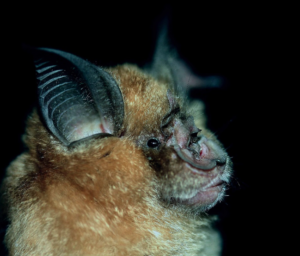
Greater Horse Shoe Bat – by kind permission of David Priddis ©
Recent media reports on the success of the Pine Marten introduction in the Forest of Dean and the Wye Valley Bats Special Protection Area have been widely circulated. https://www.theguardian.com/environment/2020/jul/13/first-signs-of-success-in-bid-to-reintroduce-pine-martens-to-england Whilst ELF is a great supporter of conservation efforts to rebalance nature, we have had concerns over this reported matter. ELF has been working with a local bat expert since the beginning of 2020, regarding his significant concerns about the release of Pine Martens in this area and the direct impacts on protected bat species. We have been working to stop a second release anticipated this autumn, until there has been a proper assessment of the impact on the protected bats species undertaken.
Stephen Davison approached ELF at the beginning of the year, regarding the impacts on Greater Horseshoe and Lesser Horseshoe Bats, European Protected Species and qualifying feature species for the Wye Valley and Forest of Dean Bats SPA and the lack of an Appropriate Assessment as required under Regulation 6(3) of the Habitats Regulations. Pine Martens are known to predate on bats and two reports commissioned (shadow Habitats Assessments) both concluded that “significant effects” on protected species could not be ruled out. Yet no appropriate assessment was carried out. One report stated:-
One shadow report stated:-
“Given their location and the nature of the buildings, mines and caves they are found in, the most important SAC bat populations could be at risk from pine marten predation and/or disturbance, due to the vulnerability of many of the roosts to entry by pine martens. The severity of impacts is very difficult to quantify but, for instance, without mitigation, a chance event of surplus killing at …………in winter could have severe and potentially irreversible impacts on the status of greater horseshoe bats as a qualifying feature of the SAC.”
A joint project by the Gloucestershire Wildlife Trust, the Vincent Wildlife Trust, and the Forestry Commission, a collection licence was obtained from Scottish Natural Heritage for the collection of PMs from Scotland. They were released onto land last autumn belonging to the FC whose permission was required for the release. As is the nature of such releases, there has been much secrecy regarding location and timing.
However we found out that at least some of the releases had taken part on FC land and either within or near to the European Protected site. ELF is much encouraged that FC are now properly engaging with our clients concerns, following the threat of legal action.
The article 6 (3) Habitats Reg’s Appropriate Assessment, we have now been assured will be carried out and no further releases will take place until this has been done. Only then will they have the appropriate information as to whether or not further releases will go ahead.
ELF has been working with Kim Ziya at Landmark chambers on this matter throughout and we wish to thank her for her fantastic advice and her generosity of time and for getting us so far.
Reg. 63 of the Habitats Regulations:
“(1) A competent authority, before deciding to undertake, or give any consent, permission or other authorisation for, a plan or project which—
(a) is likely to have a significant effect on a European site or a European offshore marine site (either alone or in combination with other plans or projects), and
(b) is not directly connected with or necessary to the management of that site,
must make an appropriate assessment of the implications of the plan or project for that site in view of that site’s conservation objectives.
(2) A person applying for any such consent, permission or other authorisation must provide such information as the competent authority may reasonably require for the purposes of the assessment or to enable it to determine whether an appropriate assessment is required.
(3) The competent authority must for the purposes of the assessment consult the appropriate nature conservation body and have regard to any representations made by that body within such reasonable time as the authority specifies.
(4) It must also, if it considers it appropriate, take the opinion of the general public, and if it does so, it must take such steps for that purpose as it considers appropriate.
(5) In the light of the conclusions of the assessment, and subject to regulation 64, the competent authority may agree to the plan or project only after having ascertained that it will not adversely affect the integrity of the European site or the European offshore marine site (as the case may be).
…”
We reported recently on a Tree Protection Order woodland, Local Nature Reserve and buffer zone for a Special Area of Conservation where at least annually a motor cross trial was held, causing serious damage to the woodland. There had been a year and a half of campaigning before ELF was contacted.

The trails were held under Permitted Development Rights (PDR) and therefore unless they were suspended through an Article 4 Direction, the Council claimed they could take no action to stop the trails. Though discussed the Council would not take action. We had advice from Ruchi Parekh at Cornerstone and found there to be leverage between the Habitats Regs and PDRs which we were to pursue. However, litigation was not required and we have since received the following update.
“Just over a month ago we learnt that the woods had been put up for auction. Friends of Becky Addy Wood started a campaign to raise funds for the purchase of the wood. We then came to an agreement with Bradford on Avon Town Council for the Council to buy the woods with a donation of £30,000 from FROBAW. The Council approached the vendor, the wood was taken off the auction a day before the auction was due to take place, and the Council made the purchase. The transaction was completed at the end of last week. Bradford on Avon Town Council will be drawing up a management plan together with FROBAW to ensure that the wood is properly managed and maintained and that its conservation is enhanced. There are plans, for example, to seek designation of the wood by Natural England as a statutory nature reserve.
We wondered whether Wiltshire Council passed on to the club/the owner that legal action was in the offing and this may have had a direct effect on the owner’s decision to sell – and also the fact that the club did not try to buy the woods.
Thank you so much for all the support that you and Ruchi have given us in our long campaign to protect the woods. “
It is a truth widely acknowledged that trees have little protection. If a tree or woodland that you are fond of has the good fortune to have a Tree Protection Order (TPO), it still doesn’t stop it being felled, when it comes to development.
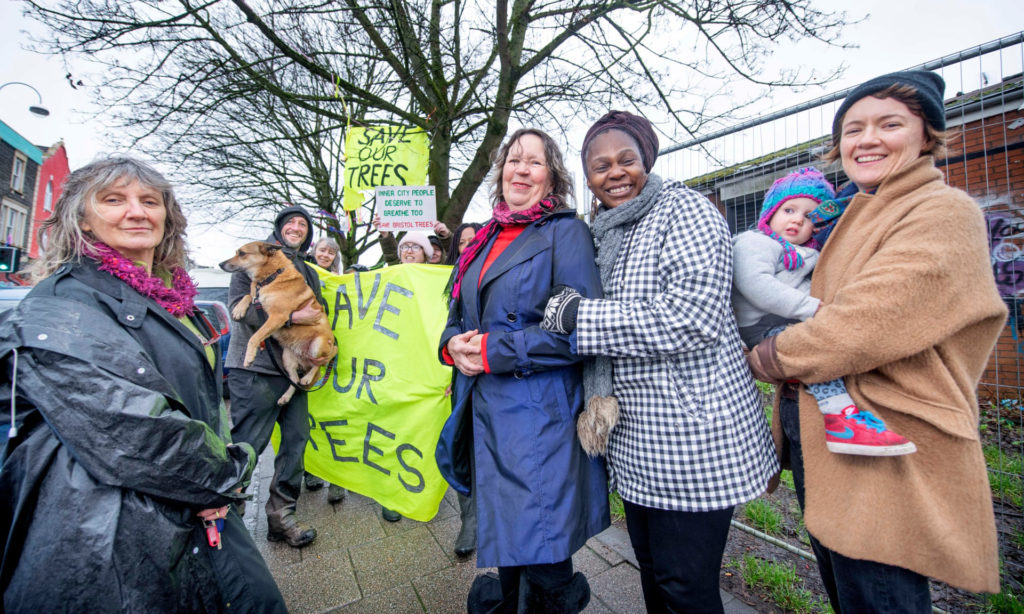
This was brought into stark relief last month when we were approached by local Bristol residents about a fight to save 3 mature Maple Trees, originally there had been 5. All 5 trees had TPOs but when a developer with previous outline planning permission to develop land, put in a notice to demolish the buildings on the land, it looked like the trees would be forfeit. Two trees were felled without residents realising what was happening which produced a great wave of local anger and protest to save the remaining 3. Local and active protest ensued and the residents were soon a common sight protesting around the trees. In a place of poor air quality and lack of green space, the trees are locally valued and loved. With great determination and at this stage, no legal assistance, residents scrutinized planning documents and realised there was a question over whose land the trees were on. And yet still there seemed there was nothing that would save the trees, bar protest. When ELF became involved, we sought on the ground advice from Polly Reynolds, ELF member solicitor at Temple Bright solicitors in Bristol. Polly quickly met with residents and a letter was fired off to the Planning Department setting out residents findings. This has had the effect of postponing the felling of the trees for the moment, whilst an investigation is carried out.
The other contributing factor to the residents’ success was a well devised media campaign. Whipping up a media storm for a local campaign can be an extremely useful form of attention seeking. These residents were interviewed by many news outlets, finally appearing on Radio 4’s 5pm News Programme. Creating a PR disaster for a local authority can be a powerful tool.
The Environment Bill, due for its second reading at the end of February before the committee stage, contains additional protections for trees.

Heathland restoration carried out by the Dangstein Conservancy
Dangstein Conservancy, operating in the newly created South Downs National Park, is a “grass-roots” land-based action group with the broad aim of practising and promoting more environmentally sustainable ways of living on, and caring for, the land. For nine years vested local interests had deployed various stratagems to frustrate the Dangstein Conservancy, until November 2019 when, following a lengthy public inquiry, the Planning Inspector found in favour of the group, whose spokesman kindly said this was “thanks largely to the inspiring and generous intervention of the Environmental Law Foundation”.
The following is an abridged version of their subsequent report:
The SDNP is dominated by farming, forestry, market towns and scattered dwellings, with many cities and urban areas fringing its protected landscape. Within commuting distance of London and other cities, it has some of the highest residential property values in the UK. This and other factors mean that, despite its protected status, the National Park is not immune from social, environmental and economic problems that are both local and global in their cause and in their effect.
In 2016 the Conservancy put forward planning proposals that sought to deliver mutually supportive environmental, social, and economic “net gains” to the local community, prioritising ecological objectives and promoting community understanding and enjoyment of our woodland whilst making productive use of local timber that is a renewable and versatile natural resource. The Conservancy re-introduced a centuries-old practice of ‘productive multifunctional woodland management’, that is active management of woodland for its productive resources, for learning crafts skills, for personal wellbeing and for social interaction.
However, forestry is not currently defined in UK planning law and is merely an addendum to agriculture – growing trees as a crop. Conventional wisdom and to some degree official understanding still seek to argue that “forestry” entails periodic visits to the woods by peripatetic contractors perhaps every 40 to 80 years to undertake landscape-scale tree felling, followed by replanting and further lengthy period before the cycle restarts. This may be viable for the large Scandinavian pinewood commercial forests that benefit from economies of scale. But the consequent devastation of the landscape and its wildlife, and the slow recovery of forests managed this way is wholly inappropriate in a National Park in England, designated to protect the visual appeal of its wooded landscape and with the express purposes of ecological conservation and promoting public understanding and enjoyment of the Park’s “Special Qualities”.
The Conservancy’s 2016 planning proposal won support in principle from the Planning Committee, but after necessary technical clarifications it was re-submitted. Perversely, the committee changed its mind in 2017 and refused the proposals on principle.
The Conservancy appealed the planning decision in January 2018, which was ultimately heard in four day Public Inquiry in November 2019, the delay having been caused by the neighbours’ issue of a Judicial Review against the planning authority. The Conservancy’s crowdfunded case amounted to over 230 documents and was a substantive, convincing, coherent and concise argument, steered by the fortuitous and generous intervention of the ELF, a legal charity “promoting the collective, good decision-making [in matters affecting the natural environment] which is at the very heart of civilised, democratic and stable societies“.
The Planning Authority argued that the information provided in the Conservancy’s case had not “demonstrated that the proposals would avoid conflicts with development plan policies” on Sustainable Development, Landscape Character and Relative Tranquillity. This contention was very robustly countered by the Conservancy. The Inspector agreed, stating the “For the vast majority of the time there should be very little disturbance beyond the site at all. It does not seem to me therefore that there should be much if any harm to residential amenity” in the neighbourhood. The Inspector determined that “The amenity and experiential qualities of the landscape will be enhanced as many more people will be able to experience the woodland and to learn about it without unacceptably degrading its essential qualities“. The Inspector further stated that “In my view the activities proposed by the appellant fit into both purposes [of the National Park], wildlife and cultural heritage will be enhanced and opportunities for the understanding and enjoyment of its special qualities will be promoted” and adding that “I consider [local residents’] concerns are misplaced“.
The case firmly establishes that sustainable environmental proposals should be supported, especially in a National Park. The case shows that neighbours intent on furthering their own private objectives cannot credibly argue that protected status of the land excuses them from addressing the many environmental, social and economic problems we face as individuals, communities and a society. If anything, National Park status confers a deep responsibility to address such challenges even more urgently, as residents and landowners in National Parks are custodians of the land held in trust for the benefit of the entire nation.
We consider that access to the services of a barrister at the Planning Appeal stage, who can pull together an extremely complex argument, retain focus on key points and respond to counter-arguments of barristers acting for other parties is critical to the successful functioning of the planning process. For community groups without the necessary expertise and resources to present such a credible, intelligible argument and without being unduly overwhelmed by the emotional commitment to their cause, the good services that ELF facilitated significantly levelled the odds in an adversarial arena against in which the Conservancy had struggled for the previous 9 years.