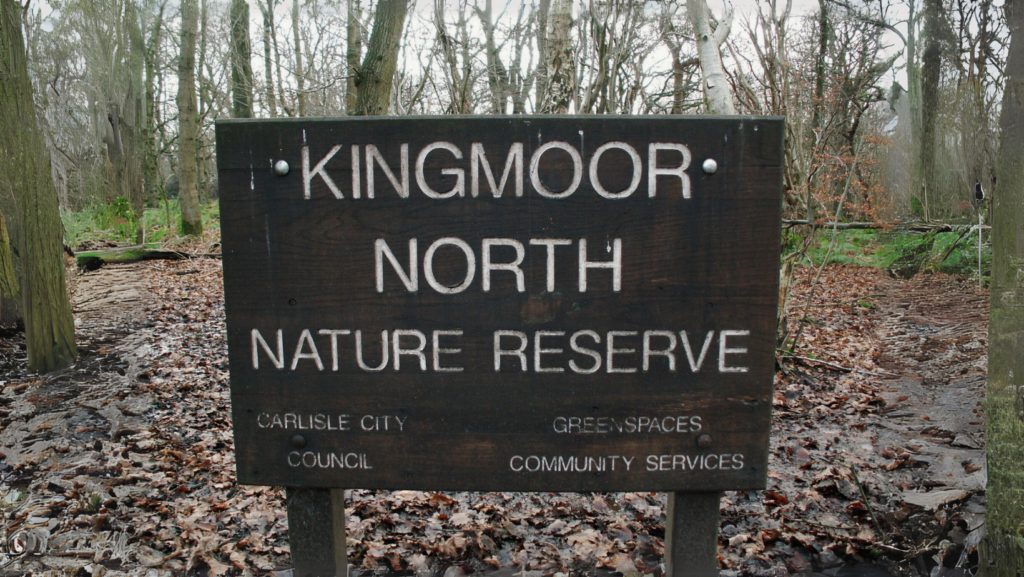
 In the picturesque city of Carlisle, a battle has been raging amongst the local community, against a looming environmental disaster. Since 2016, the community has been divided as an imposing moving-grate incinerator proposed by Fortum Carlisle Limited threatens their local environment. On one side stand the determined residents united under Carlisle Residents Against Incinerator (CRAIN), while on the other side, bureaucratic entities push forward with the project.
In a city where each sunrise might soon be veiled by the smoke of the incinerator, the local populace fears for their local natural environment, public health, and future generations. Their concerns are scientifically grounded, pointing towards increased toxins, compromised air quality, and insidious health risks. UKWIN who supported CRAIN are clear about the science.
Navigating through Bureaucratic Labyrinths: Hurdles in Seeking Environmental Justice
CRAIN has played a significant role in highlighting the issues surrounding the Environment Agency (EA) and exposing a number of flaws in the decision-making process for the proposed incinerator. The EA, tasked with handling the public consultation process for the permit application, has been met with criticism and complaints about their modus operandi. The Permit was granted on the 13th April 2023 and ELF subsequently sent out a Pre-Action letter setting out the potential grounds of challenge. The first of those was how the EA had not properly addressed important aspects of concerns raised (in response to the consultations) regarding the Kingmoor Nature Reserves. This was a positon supported by Cumbria Wildlife Trust. Concerns were raised around the impacts on the biodiversity at the Kingmoor Nature Reserve sites including the rare butterflies and moths at Kingmoor North Nature Reserve and the presence of lichens and bryophytes and the impacts of emissions upon them. In addition the inclusion of inaccurate background air quality assessment data from a location, Eskdale Muir, which is not representative of the proposed site, has further fuelled the fears and frustrations of Carlisle’s citizens. The EA’s acknowledgment of this error post-permit issuance does little to placate or reassure a community left disillusioned and mistrustful.
The Unaffordable Cost of Justice: Carlisle’s Deflated Legal Pursuits
In an era where environmental conservation should be paramount, the residents found themselves locked in a legal and financial conundrum. As the Environmental Law Foundation explored the possibility of a judicial review, with help from Sian McGibbon of Landmark Chambers, against the EA’s decision in favour of the incinerator, the crushing financial burden and a stifling deadline snuffed out the flame of legal resistance.
Transcending Carlisle: A National Reckoning with Environmental Justice
While Carlisle’s plight might be a singular case, it is emblematic of the broader systemic and bureaucratic impediments citizens across the UK face when pursuing environmental justice. Our recent ‘A Pillar of Justice II’ report (link), highlights the challenges faced by the UK in aligning its practices with the principles of the Aarhus Convention. These principles emphasise public access to information, participatory decision-making, and access to justice in environmental matters.
Carlisle’s struggle is not just a local issue; it is a magnifying glass over the deficiencies and barriers within our systems that stifle the voices and thwart the efforts of everyday people in their pursuit of environmental justice and safeguarding their future. Through the complex web of these administrative and systemic challenges, the question that arises is: How can we reform and ensure our pathways to environmental justice are not a gauntlet but an accessible, transparent journey for every citizen, irrespective of their financial might? How do we ensure that cases like Carlisle are the exceptions and not the rule in our pursuit of a greener, safer future for all?
A tapestry weaves through numerous cases across the UK where citizens, in their pursuit of environmental justice, grapple with systemic, bureaucratic, and financial barricades. It shines a light on these struggles, prompting a nation-wide introspection. Resistance in Carlisle sparks the flame of nationwide environmental justice and democracy. This light, borne from the struggles of everyday people, can break through the smog of future crises.
Consider donating to help us continue fighting for environmental rights.
The work that we do is powered by people like you. If you’d like to support us, as we help grassroots organisations fight for environmental justice, you can do so by donating here.
 Enhancing Quality of Life Through Environmental Action
Reaching Out to Brixham Foundry
Northfield Foundry has been emitting hazardous and noxious emissions for over two decades, with the local residence continually raising their voice in protest. Despite multiple warnings and demands to Torbay Council, no meaningful action was taken. In response, in 2019 a citizens’ campaign with the aid of ELF was established to fight for cleaner air in the community. The campaigners sought to build a relationship of trust with Brixham Foundry, as the factory provided much needed jobs and support to the local economy. Unfortunately, their repeated attempts to contact the Foundry were ignored, and faith in the integrity of Torbay Council was broken.
Leveraging ELF’s University Network
One ELF’s great strengths is our connected network of professionals and universities to provide research, guidance and counsel. During this case, we turned to our university connections for assistance and guidance. With the resources and knowledge supplied from the University of Exeter clinic, the campaign team was able to gather and present a substantial amount of evidence that put immense pressure on Northfield Foundry. The campaigners’ efforts paid off and the Foundry eventually yielded to their demands, agreeing to replace their furnaces with an electric fleet by March 2023. Despite the Foundry’s commitment, the supportive attitude from the local representative in parliament and elected councilors was absent and this lack of support was profoundly disheartening.
Strength in Community
The Northfield Foundry campaign showcased the true strength of the community and the power of collective action. The campaign team demonstrated that citizens can take charge of their environment and pave the way for meaningful change. All of the efforts put in by the campaigners and the pressure put on Northfield Foundry helped bring about improved air quality and better respiratory health for the local community.
This remarkable story is an example of how citizens can work together in pursuit of a cleaner and healthier space. It shows the importance of holding elected officials and corporations accountable and of the collective strength possessed by the community. Thanks to their hard work and tenacity, the Northfield Foundry campaign is a model for how everyone can take action in order to ensure their environment is protected.

ELF has been helping volunteer group Better Streets for Kensington and Chelsea (Better Streets) in their campaign to re-instate a safe cycle lane on High Street Kensington, located in the Royal Borough of Kensington and Chelsea (RBKC) in London.
Installation of safe infrastructure for those wishing to travel by bike has become a national discussion, with some describing it as a “war on motorists”. That’s certainly not the context in RBKC. Prior to the lane’s removal, and during its short life, it was the only safe protected cycle lane on the entirety of the borough’s 207km road network where since 2013 the amount of vehicle traffic has increased by 50 million miles per year.
RBKC is infamous among campaigners for walking and cycling for its lack of action over decades, including on High Street Kensington where plans have been tabled many times over the years as it is part of the overall London strategic network, and neighbouring boroughs are completing their part.
The lanes were installed in October, 2020 for a trial of up to 18 months, but ripped out after just seven weeks, despite the lanes working very well. ELF wrote a pre-action protocol letter of 23rd December set out seven grounds of unlawfulness of RBKC’s decision.
This challenge was successful, and on 8th January, RBKC wrote to Better Streets to say they would “revisit” the decision to remove the lane on 17th March – when, as predicted, they made the same decision, but attempted to get the paperwork better.
ELF and Better Streets are considering next steps – at first glance it doesn’t look like this decision is any more lawful than the last. The lanes are supported by a huge cross-section of society, from Waitrose to the Royal Albert Hall, to the local NHS Trusts, seventeen local schools, universities Imperial College London and the Royal College of Music – as well as a survey commissioned by TfL showing most residents are also in favour.

Photo showing scale of building, permission issued without amenity conditions threatened the residents
A matter that started with ELF has been successful in a Judicial Review claim, despite being a year since the decision. This is an eminently just decision for local residents and ELF would like to thank ELF members Horatio Waller and Ian Graves and congratulate them on a good result for the local community in Milton Keynes.
In December of 2018 ELF was approached by two separate individuals on the same matter. Local people in Milton Keynes had discovered that the permission for the enormous new industrial building being built meters from their bungalow homes did not have any of the amenity conditions, as should have been attached to the permission. Awareness of this had first come to light when trees that residents had thought protected, were felled. On reviewing the planning permission it was revealed that all 13 amenity conditions were missing. A sorry situation for local residents as conditions related to landscaping, light and noise were imposed to protect the amenity of neighbouring residents. As we were now over a year since the decision notice had been issued, the question was could we still JR the original decision?
ELF approached Ian Graves, ELF solicitor member at Shakespeare Martineau and Horatio Waller at FTB. Both agreed to undertake the matter under a CFA.
Horatio Waller explains more fully. https://www.ftbchambers.co.uk/news/success-judicial-review-claim-issued-1-year-out-time
“It emerged after JR was issued that the developer and junior officers of the Council had discovered the mistake soon after the notice was issued, but residents and senior planning officers were kept in the dark for several months. When senior officers discovered the mistake they attempted to rectify the error by encouraging a second application for identical development, subject to a unilateral undertaking revoking the first permission.
Permission on a second application was approved by the DCC, but a decision notice was never issued. The reason why became public knowledge only after JR was issued. The developer had attempted to persuade the Council to drop one of the conditions on the first permission, which controlled access to the site by heavy goods vehicles (HGV), in return for it implementing a second identical permission that included the missing conditions.
This was unacceptable to the Council and the arrangement fell through. The Council then decided to impose a s102 order imposing controls on lighting, but not controlling other matters addressed by the missing conditions. This was only a partial solution, so Mrs Wardlaw issued JR out-of-time to challenge the planning permission. By the time JR was issued, over a year had expired since planning permission was granted and the development was almost complete.
The deadline for issuing JR of a grant of planning permission is six weeks, but the Court has a power under CPR 3.1(2)(a) to extend the time limit which can be sought after the expiry of the six week period. Mrs Wardlaw sought permission to issue JR out-of-time, arguing that there were “very special reasons” why the Court should do so citing Sales LJ’s judgment in Gerber v Wiltshire Council [2016] 1 WLR 547 at [49].
Reliance was also placed on the High Court decision in Thornton Hall Hotel Ltd v Wirral WBC [2018] PTSR 94 where a judicial review claim against a grant of planning permission was allowed notwithstanding that it had been brought five years out-of-time. In that case the planning permission had erroneously omitted conditions specified by the planning committee, including a five-year time limit on the permission, and the claimant had issued the claim with reasonable speed on becoming aware of the mistake. The judgment was recently upheld on appeal ([2019] EWCA Civ 737).
The Wardlaw JR settled after the developer and Council agreed to revisit the proposal of promoting a second application for identical development on the site. The developer dropped its stance that no HGV condition should be imposed and gave a unilateral undertaking that it would cease implementing the first permission and implement the second permission. Planning permission was subsequently granted.
This settlement meant that Mrs Wardlaw could discontinue her claim because the underlying issues had been resolved and the Council had agreed to pay her costs.”
This is the best result the community could have hoped for. There has been subsequent disquiet from local councillors that this building, so out of scale with local homes, was recommended for approval in the first place. At least now, thanks to a great legal team, the community have the protections that they expected.
ELF sees all sorts of enquiries from members of the public, each requiring their own individual response. A recent case involving concerns about the potential loss of a substantial length of hedgerow on a housing estate is illustrative of this variety.
One Friday we received an urgent request for assistance from a litigant in person who had received no legal advice up to that point.
He needed some guidance about how to apply for a judicial review renewal hearing. This had to be with the court by 4pm that day. We were able to give some very basic guidance to facilitate the enquiry and the renewal was duly made. However ELF had not been able to give any guidance regarding the substance of the claim and we were a little concerned.
The matter was in itself an interesting case of a social housing estate in Kirklees where, following a consultation with local residents and an unclear result, the local housing association had decided to remove 546 metres of hedgerow from around the estate.
The main reason for the removal was maintenance costs. The hedge was to be replaced with metal fencing. The results of the consultation was in dispute and there was much bad feeling.
In between the renewal being made and the proposed resumption of the removal of the hedges, the local residents started to protest in earnest.
Following a morning protest which prevented the works beginning on the following Monday, a street meeting was held with senior managers of Kirklees Council, keen to avoid further trouble. Up to this point the local authority had not been involved.
Following this meeting, it was decided to suspend the works and offer a series of around-the-table consultation meetings between themselves and the local action group before any move to restart works to remove the hedges. This was a significant result for the local community.
ELF provided research to the enquirer on local planning policy regarding hedges and gave the wider health and wellbeing context – in fact Kirklees Council had produced a paper on the benefits of hedges over trees in their combating of air pollution. Whilst we did not think the Hedgerow Regulations were applicable, there was local guidance and we were able to supply all this to the enquirer for local dissemination and information for the forthcoming round of consultative meetings with local residents.
There are many local communities at the moment, fighting against hedge and tree removal, with costs being a justification by the body removing them. This is not a dissimilar fight to that taking place in Sheffield, where thousands of street trees have been removed to placate costs.
This maybe a small localised fight but none the less is of huge significance to the local residents.
It is just the sort of matter that ELF can assist with – for more information about getting help, see here.
UPDATE
ELF is delighted to report that the group we assisted in Cwmfelinfach, South Wales, the Lower Sirhowy Valley Residents Group, learnt yesterday that Natural Resources Wales have refused to grant an environmental permit for the proposed waste plant in their valley. When the group first came to ELF in August of last year, planning permission had already been granted and NRW were indicating that they were likely to grant an environmental permit in early September. Local residents had serious concerns over the health impacts of the proposed waste plant.
By the time the group came to ELF, they had already done a lot of work on the issue of emissions, much of it technical analysis of the applicant’s reports, and had a clear understanding of their own local environment notably the often seen weather event in their valley “temperature inversion”, a rare weather phenomena otherwise.
Local knowledge backed up by a determination to understand the technical reports, which led to them revealing many inconsistencies in the applicant’s reports, such as taking no account whatsoever of local conditions having made their readings from places as far away as 35 miles, meant the group did a phenomenal job in scrutinising the application. Quite soon it became clear that NRW had their own concerns with the application.
This is great example of where local people have the knowledge that outsiders do not have, when it comes to their local environment. And the tenacity to be undaunted by technical reports and to carefully consider them which resulted in their discovering problems with the application.
This morning we received an email from our contact from the group to say thanks to all at ELF who helped, the ELF professional members who we referred the work too – both Rory Hutchinson of JCP Solicitors and laterally Richard Buxtons solicitors.
“Counsellor Jan Jones and the group asked me to personally say thank you and Environmental Law Foundation for what you have done for us . . . the local pub was drunk dry yesterday evening from the village celebrating our good news!!”
More about this case below:
The Lower Sirhowy Valley Residents Group in Cwmfelinfach, South Wales, contacted ELF seeking help in assessing an environmental permit application from Hazrem Environmental Ltd. It wants to build a new waste processing facility to accept up to 100,000 tonnes of non-hazardous waste each year and turn it into fuel for incinerating power stations. Lorry diesel air pollutants will arise from hundreds of deliveries and collections each week, whilst the facility itself will generate high volumes of dust.
Planning permission for the building has already been granted.
Hazrem Environmental’s chosen location for the facility is a steep sided valley, well known for experiencing temperature inversions caused by cold drainage flow. Such inversions are a recurrent meteorological feature of valleys in the area, highly familiar to local people, which can trap cold air – and its pollutants – in a valley for days at a time.
The application took no account of these inversions and their potential to result in very high levels of pollutants. Its weather modelling used data from two weather stations, one on the coast at Rhose Airport, 35 miles away, the other on an open plain 7 miles away at Caerphilly.
Similarly, its air quality estimates – as the group only discovered six months after the granting of planning permission – used bias adjusted figures not from where the facility will be located, but from Caerphilly and Blackwood where, again, the topography bears no resemblance to the proposed location of the new facility.
Public Health Wales, responding as statutory consultee, has warned, “We would therefore recommend that the Regulator [Natural Resource Wales] exercise caution in considering the granting of a Permit”.
This case illustrates how difficult it can be for communities (and planning authorities and lawyers) to identify and challenge technical reports. With this in mind, ELF have begun discussions with our university partners about the possibility of involving technical and scientific departments, in their ELF clinics.
If practical, this would significantly boost the ability of communities to assess and present hard evidence on matters such as air and water quality, geological and biological impacts, and noise. Please get in touch if you can help us progress this initiative.
The photo shows a temperature inversion over Islwyn Road, Wattsvile at 8.30am – rush hour traffic. This area already exceeds the recommended level of air pollution.
Liverpool Green Party, with the support of the Environmental Law Foundation (ELF), has taken the first step towards legal action against Liverpool City Council (LCC) in respect of the decision to grant planning permission for a 333-space multi storey-car park on Victoria Street in Liverpool City Centre.
The Greens point out that LCC failed to consider air quality and, therefore, failed to comply with national planning policy requirements in granting planning permission for its own development on the site last month. Liverpool Green Party also contest that tree protection has not be dealt with correctly.
The Greens vigorously opposed the planning application to fell 36 mature trees to build the multi-storey car park in what is an already a congested and polluted city centre location, only replacing 8 trees.
Cllr Tom Crone, Leader of Liverpool’s Green Group said, “We lodged a detailed set of written objections and spoke to members at planning committee about our belief that air pollution and tree loss were not being dealt with properly. We argued that the car park would result in a significant increase in air pollution and have a negative impact upon the health of local residents and city workers. The city centre is designated as an Air Quality Management Area because the City Council knows that air pollution levels are too high here. The Council published an Air Quality Action Plan for the area in 2008, so we know this problem has existed for some time. We strongly believe that an Air Quality Assessment was necessary for this large car park, so the public would have clear information about its potential impact upon local air quality”.
Air quality assessments include an assessment of current air quality and analyse the impact of any additional pollution created by a development. They provide the facts on which a sound decision can be made. The biggest problem pollutants in the area are likely to be nitrogen dioxide and the specs of black dust in car exhaust known as particulates.
Cllr Crone said, “Before the application went to planning committee, the Green Party asked the Planning Service to step back from the decision to recommend the application for approval without an air quality assessment and highlighted the fact that air quality was not even mentioned in the report to planning committee. This request was dismissed, and on the day of committee, members were advised that the development would have no effect on air quality and there was no need for an assessment. How could it be the case that a multi-storey car park would have zero effect on air pollution?”.
ELF enlisted the help of barrister Charles Streeten from FTB and a pre-application protocol letter, setting out the grounds for a challenge, was delivered to LCC on the 8th March 2017.
UPDATE
Despite Liverpool City Council’s response to the pre-action protocol letter failing to address concerns about air quality and the felling of 36 mature trees (within days of the planning decision), the Liverpool Green Party (LGP) is not able to proceed with a legal challenge.
Added to the uncertainty around the potential costs risk in view of recent changes to the costs rules, the Council’s response indicated that it would look carefully at a PCO application and seek confirmation of a claimant’s financial resources. As an unincorporated association, LGP would only be able to take legal action through someone acting on its behalf. In the circumstances, LGP was unable to find an individual willing to take on such a high level of risk and exposure. The chilling effect of these costs rules changes on environmental challenges by communities is clearly already evident.
Liverpool Green Party (LGP) has been offered a glimmer of hope in its quest for environmental justice.
With the support of the Environmental Law Foundation (ELF) and Counsel, Charles Streeten of FTB, LGP is applying to intervene in the legal challenge to the Ministry of Justice’s (MOJ) changes to the costs rules in environmental cases being brought by RSPB, FOE and ClientEarth.
ELF wrote to the MOJ for an assurance in advance of making the application that there would be no order for costs against LGP. The rule changes had last month prevented LGP challenging planning permission for a multi-storey car park with no consideration of air quality impacts.
Today (Friday 28th April 2017) we learnt that the MOJ has agreed that it will not seek to recover costs against LGP for such an intervention. This clears the way for the LGP to press ahead with an application to intervene. Without this assurance, LGP would have been unable to do so.
Government changes brought in via the Criminal Justice and Courts Act 2015 section 87 mean that intervenors in challenges now face the risk of costs awards against them. ELF considers that LGP has important information relevant to the MOJ challenge to present before a judge, and they now have an opportunity to do so.
In the earlier case, LGP was unable to challenge a decision taken by Liverpool City Council (LCC) to approve a 333-space multi storey car park in an Air Quality Management Area (AQMA), without undertaking an air quality assessment.
Whilst LGP had good grounds to challenge the decision, as an unincorporated association, LGP would only be able to take legal action through someone acting on its behalf. The new rule 8(5) of the Civil Procedure (Amendment) Rules 2017 SI No 95 remove the certainty of a costs cap for a claimant in the event of losing and enabled LCC to require disclosure of the financial resources of any claimant. In the circumstances, LGP was unable to find an individual willing to take on such a high level of risk and exposure.
Emma Montlake of the Environmental Law Foundation said:
“We think we have important evidence to present to the court, demonstrating the “chilling effect” of the new costs rules, on community’s ability to challenge bad environmental decisions and hope now that we will be given leave to do so”
Update
The application by Mr Thomas Crone on behalf of the Liverpool Green Party to intervene was refused by Mr Justice Holgate on the 8th June 2017.
In refusing permission the judge said “I agree with the Defendant that it is inappropriate to grant permission to Mr Crone to intervene, in particular to argue points of law which fall outside the scope of the grounds for which permission has been granted to the Claimant”.
This exposes a difficulty in that unless an applicant to intervene raises a separate point of law they are at risk of costs under the Criminal Justice and Courts Act 2015. However, the claimants in the judicial review were given permission to rely on Mr Crone’s witness statement where it related to their existing grounds of challenge.
This was a very disappointing outcome for all concerned as we had all put a lot of work into this, especially Charles Streeten of FTB, who had acted entirely pro-bono.
Community Benefit Society R4C have lodged a complaint with the Competition and Markets Authority (CMA) that the contract for a Stroud incinerator is in breach of competition rules.
As highlighted previously, R4C was set up following a long campaign against proposals for the Javelin Park incinerator, finally given permission by Gloucestershire County Council (GCC) in 2015.
When the planning appeal and the legal challenge were lost local objectors decided to take a different tack and R4C proposed its own alternative, commercially sustainable recovery and recycling plant. The contract, originally signed in 2013 and then renegotiated in 2015, for the £500 million incinerator was awarded to Urbaser Balfour Beatty although details on pricing and information on termination were only made public following an Information Tribunal ruling in March this year (2017).
In light of this information, and after seeking assistance from Counsel through ELF member, Duncan Sinclair of 39 Essex Chambers, R4C lodged a complaint with the CMA on 21st March that the Javelin Park contract breaches the Competition Act 1998.
R4C believe that the exclusive contract is anti-competitive and prevents technological innovation, imposing a huge financial burden for years to come. They state that:
- the price paid by GCC for waste disposal for a minimum amount is 10 times the next tranche, thereby creating ‘de facto’ exclusivity and foreclosing the market for waste treatment (including eliminating incentives to recycle/move higher up the waste hierarchy);
- there are excessive termination costs thereby enforcing the ‘lock-in’; and
- the 25-year contract prevents newer, cheaper and more efficient/environmentally friendly alternatives developing to the detriment of consumers in terms of not only price but also their interest in the environment (both local and more broadly).
On 31st March R4C published independent analysis of the Javelin Park contract at an event at the Guildhall, where the actor Jeremy Irons spoke in support of the report.
If the complaint is upheld the contract could be declared void and GCC would face financial penalties.
somers Town in central Camden is a green oasis, of mature woodland and community garden in one of the most deprived areas of central London. Set in the middle of a housing estate, it is a space of real amenity value where many of the residents do not have outside space and is designated as both public and private green space. Next to some of London’s most significant redevelopment around King’s Cross and St Pancras, it was designated in the local plan as a place of “limited change”.
When a local group, Somers Town Neighbourhood Forum (STNF) first approached ELF nearly two years ago, it was because they were concerned over Camden Council’s emerging proposals in respect of the treasured and much cherished green space. They were right to be worried as Camden’s proposals took shape. ELF has been working with the group ever since in conjunction with Dr Jane Holder at UCL – looking at issues of green space and their own emerging neighbourhood plan.
However ELF’s most important role came recently after Camden approved a planning application, granted to themselves to redevelop the land, as feared, building on the green space. Despite the limited change designation, the planning permission envisages vast change. In order to pay for the redevelopment of a school, the development requires as “enabling development” a 25 story tower of luxury apartments, the felling of dozens of mature trees and the loss of the beautiful community garden, created just over a decade ago in recognition of all the upheaval and disturbance locals endured during the construction of HS1 (Eurostar). Frightened at the prospect of their neighbourhood changing irreconcilably ELF sought expert advice for the group.
Working with a fantastic barrister at 39 Essex Street, Daniel Stedman Jones, we worked on drawing up grounds for a judicial challenge. As litigation became more certain ELF brought in Paul Thompson of Temple Bright solicitors, ELF solicitor member and ex ELF intern.
We already knew that the Council had given no consideration in the planning officer’s report to the CS4 policy on the area being one of “limited change”.
CS4 states:
“The Council will ensure that development in the areas of more limited change respects the character of its surroundings, conserves heritage and other important features and provides environmental improvements and other local benefits where appropriate”
The policy sets the strategic priorities for Somers Town and, as such, is the most important overarching planning policy for the area and not being considered – in our view – was an error in law.
Through Daniel’s further investigations we also realised that no needs assessment had been carried out on the issue of public space provision. A needs assessment is required by the London Plan. It says “Replacement of one type of open space with another is unacceptable unless an up to date needs assessment shows that this would be appropriate”. No up to date needs assessment had been carried out which was another failing.
Two weeks ago proceedings were issued in the High Court and last week a CrowdJustice page for raising funds was set up. You can read more here.
For ELF this is a really important case and gets to the heart of what is required for communities to feel they have a voice. These grounds of challenge were represented to the Council by STNF and ignored.
The importance of green space to communities for health and wellbeing was recently commented on by James Cross CEO of Natural England. See here.
ELF would like to thank Daniel and Paul for their great work in bringing this all to pass.