November 7th, 2025
Protecting Ancient Woodland: Helen Hamilton on the Power of Pro Bono Environmental Action
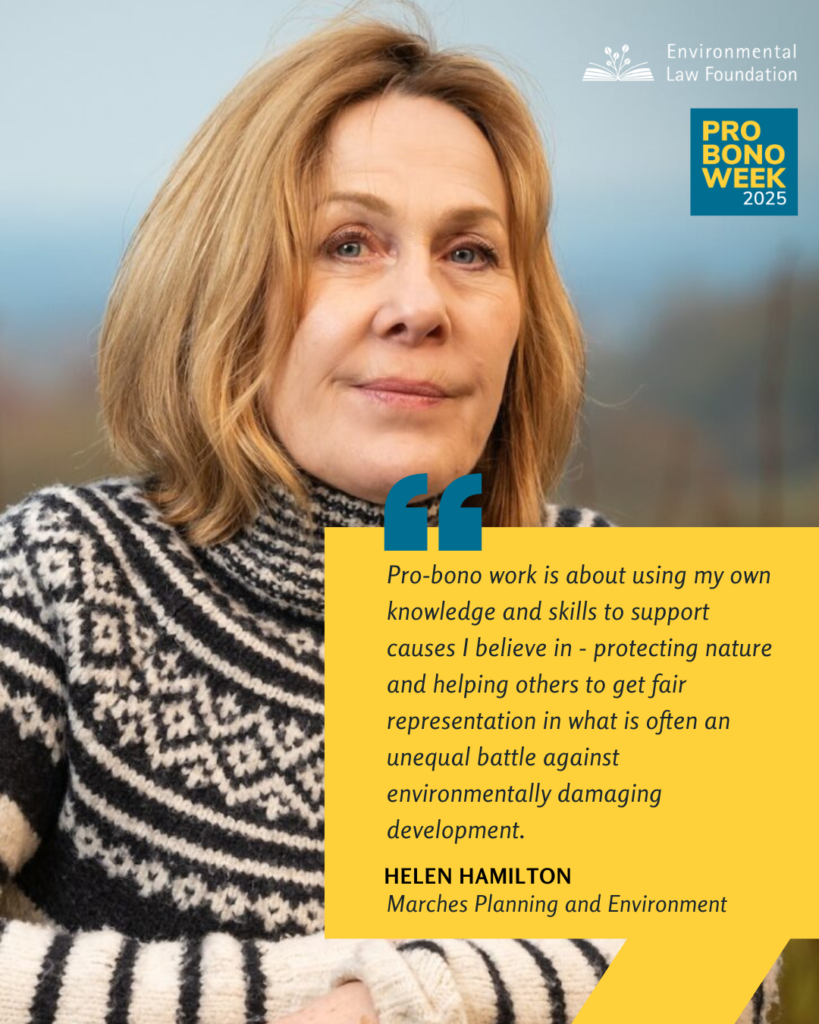
Helen Hamilton is a planning consultant and director at Marches Planning and Environment. She provides expert planning and environmental advice to communities and NGOs seeking to protect wildlife habitats and green spaces. Working closely with the Environmental Law Foundation (ELF), Helen has contributed to several major environmental cases, offering her expertise to ensure that environmental law is properly applied in the planning system.
About the case:
Helen worked with ELF and the Woodland Trust to challenge Monmouthshire County Council’s decision to approve two additional poultry units at Coombe Farm, near Shirenewton. The development threatened nearby ancient woodland and risked increasing ammonia and nitrogen pollution — a major driver of biodiversity loss across the UK. With ELF’s coordination and support from barrister Siân McGibbon and the legal team at Lester Aldridge, the Woodland Trust’s judicial review was successful. The High Court quashed the planning permission, confirming that the council had failed to comply with environmental impact assessment regulations.
What motivated you to get involved in this case?
I was and remain very concerned about the threat to biodiversity from ammonia and nitrogen pollution. This is a major problem in the UK. Natural England says around 90 % of nitrogen-sensitive protected sites are already exposed to damaging levels of pollution. If these sites are already harmed, we can be sure that sites without protection, such as ancient woodland, are suffering too, with the loss of the animal, plant and birdlife these areas support. Factory farms are one of the biggest causes of ammonia and nitrogen pollution, but planning officers and inspectors often haven’t given any thought to the risks they pose when granting planning permission.
What impact do you think the outcome will have?
I hope decision-makers will be more aware that factory farms pose major threats to biodiversity. The case is also a reminder that there are laws intended to prevent development from harming the environment, in particular the Town and Country Planning (Environmental Impact Assessment) Regulations 2017 and the Conservation of Habitats & Species Regulations 2017. Monmouthshire Council hadn’t considered this legislation at all in its decision. Sadly that is not unusual. It’s amazing how often decision-makers simply forget to carry out screening or assessment under these Regulations.
How did ELF’s coordination or support help make it happen?
The case could not have happened without ELF. Not only did ELF secure the pro bono services of barrister Siân McGibbon, who was able to advise on the law and draft the statement of case, they did so incredibly quickly, ensuring the case could be filed with the court within the very tight six-week window. Unfortunately, the very high costs of bringing legal action in cases like this mean many poor decisions go unchecked, allowing environmentally damaging development to pass without proper scrutiny.
What does pro bono mean to you in practice?
For me, pro bono work is about using my own knowledge and skills to support causes I believe in — protecting nature and helping others to get fair representation in what is often an unequal battle against environmentally damaging development.
Get involved:
ELF connects communities, experts and lawyers to defend the environment through access to justice. If you have legal, planning or environmental expertise and want to use it for public good, join our pro bono network and help us protect the places that matter.