May 14th, 2026
Holding Polluters to Account: The Fight for the River Alyn
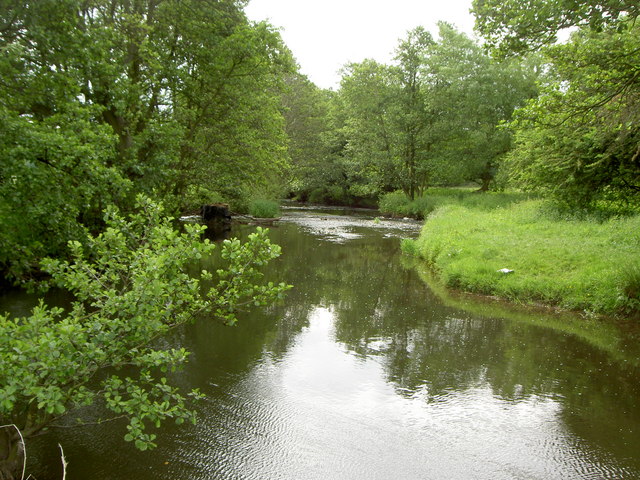
David Quinn / River Alyn near Hope
ELF has been working with Monty Fynn of 39 Essex to assist the local community in Mold in tackling pollution caused by a local chemical plant which had been operating without an environmental permit.
Our enquirer originally came to us following an incident on April 30, 2024, where a major fire and series of explosions occurred at the Alyn Works chemical plant in Mold, Flintshire, operated by Synthite Limited. Synthite initially claimed no chemicals were released, but a leaked internal memo from Natural Resources Wales (NRW) later revealed that a “significant concentration of formaldehyde” had entered the River Alyn. The incident resulted in a mass mortality event where 50 fish were found dead in the river, which is a tributary of the River Dee—a designated Site of Special Scientific Interest (SSSI) and Special Area of Conservation (SAC). The River Dee is also a vital drinking source and the surrounding area – including Alyn Works and the River Alyn – is part of a Water Protection Zone under the Water Resources Act 1991.
Following the fire, investigations revealed that Synthite had been constructing and operating a new formaldehyde production plant (the “New Plant” or “formox plant”) without the necessary environmental permit variations. NRW warned Synthite as early as May 2025 that operating the New Plant without a permit was a criminal offence. Despite these warnings, a site inspection in August 2025 found the New Plant fully operational. NRW issued a “Category 2” non-compliance score, noting that Synthite’s actions showed a “lack of understanding of the regulations” and inadequate management practices.
Further inspections in early 2026 uncovered severe air emission breaches at the site. Monitoring at emission point A16 in January 2026 showed formaldehyde levels at 96.2 mg/m³—nearly 20 times the permitted limit of 5 mg/m³. Data indicated that formaldehyde limits at this point had been consistently exceeded since January 2023, reaching as high as 191 mg/m³.
As of May 2026, a multi-agency investigation involving NRW and the Health and Safety Executive (HSE) is ongoing. However, ELF has concerns that enforcement action has not gone far enough, and that Synthite will only act if their bottom line takes a hit. Therefore, we are pushing the NRW to make full use of its prosecution powers to fine Synthite for these breaches.